

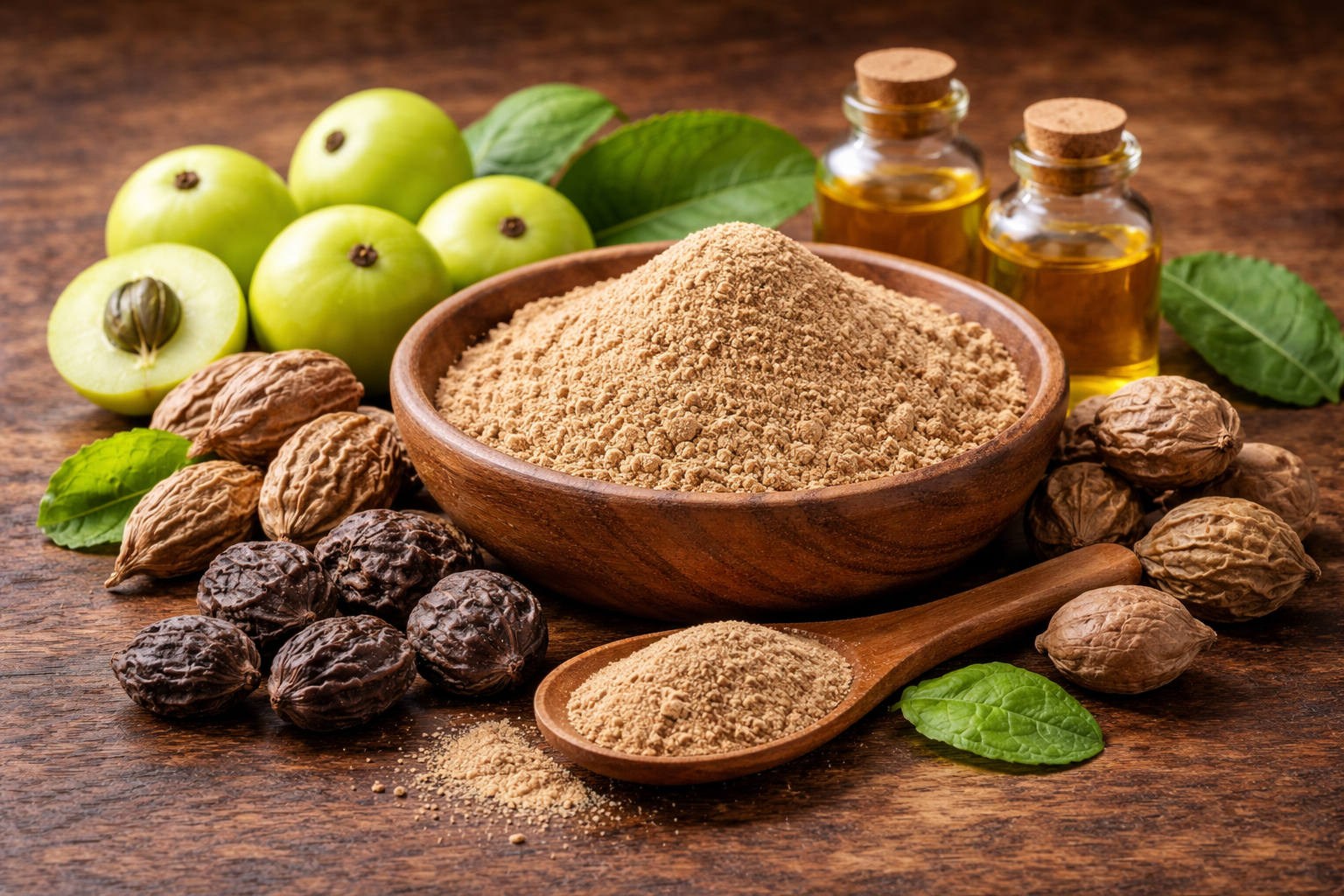
Benefits, Uses, Dosage & Science – The Ultimate Guide
Introduction
Triphala, which translates to “three fruits” in Sanskrit, is one of the most revered and foundational formulations in Ayurveda. This powerful blend combines three potent fruits—Amalaki (Emblica officinalis), Bibhitaki (Terminalia bellirica), and Haritaki (Terminalia chebula)—in equal parts to create a synergistic formula that is greater than the sum of its parts. For over 2,000 years, Triphala has been used as a gentle yet effective digestive tonic, a rejuvenative for the entire body, and a foundational support for overall health and longevity. Unlike harsh laxatives that strip the digestive system, Triphala works as a tridoshic formula—balancing all three doshas—while gently cleansing, nourishing, and tonifying the gastrointestinal tract. In recent years, modern science has begun to validate what Ayurvedic practitioners have known for millennia: Triphala is a potent antioxidant, anti‑inflammatory, prebiotic, and metabolic support agent. This comprehensive guide explores everything you need to know about Triphala, including its three constituent fruits, traditional applications, modern research, proper dosage, and safety considerations.
What Is Triphala?
Triphala is a classical Ayurvedic formulation consisting of three dried fruits, each ground into powder and combined in equal proportions. Haritaki (Terminalia chebula) is known as the “king of medicines” in Tibet and is prized for its ability to support digestion, elimination, and mental clarity. Bibhitaki (Terminalia bellirica) is traditionally used for respiratory health, Kapha balance, and weight management. Amalaki (Emblica officinalis), also known as Indian gooseberry, is one of the richest natural sources of vitamin C and is revered as a powerful rejuvenative and antioxidant. Together, these three fruits create a balanced formula that supports the entire digestive tract from stomach to colon, while also providing systemic benefits for immunity, skin, hair, and overall vitality.
The Three Fruits of Triphala
Haritaki (Terminalia chebula)
Haritaki is considered the most important herb in Tibetan medicine and is highly revered in Ayurveda. It has a complex taste profile—sweet, sour, bitter, pungent, and astringent—making it uniquely balancing for all doshas when prepared appropriately. Haritaki supports regular bowel movements, enhances nutrient absorption, clears toxins from the digestive tract, and is considered a medhya rasayana (rejuvenative for the mind), promoting mental clarity and cognitive function.
Bibhitaki (Terminalia bellirica)
Bibhitaki is primarily known for its Kapha‑balancing properties. It supports respiratory health by helping to clear excess mucus from the lungs and sinuses. It also supports healthy weight management, improves digestion, and has astringent properties that tone tissues throughout the body. The name Bibhitaki means “one that keeps away disease,” reflecting its protective qualities.
Amalaki (Emblica officinalis)
Amalaki, or Indian gooseberry, is one of the most potent antioxidants in the natural world. It contains exceptionally high levels of vitamin C, along with a class of compounds called tannins that protect the vitamin C from degradation. Amalaki is a powerful rasayana (rejuvenative) that supports healthy aging, boosts immunity, nourishes the reproductive tissues, and promotes lustrous hair and glowing skin.
Triphala Benefits: What the Science Says
1. Promotes Healthy Digestion and Regularity
Triphala is best known for its gentle yet effective laxative properties. Unlike stimulant laxatives that can cause dependency, Triphala works as a bowel tonic, strengthening the muscles of the colon over time. It promotes regular bowel movements without cramping or irritation, making it suitable for long‑term use.
2. Acts as a Potent Antioxidant
The three fruits in Triphala work synergistically to provide powerful antioxidant protection. Studies have shown that Triphala has greater antioxidant capacity than many individual herbs, protecting cells from oxidative stress and slowing the aging process.
3. Supports Gut Health as a Prebiotic
Triphala has been shown to selectively promote the growth of beneficial gut bacteria while inhibiting pathogenic strains. Its prebiotic effects help restore a healthy gut microbiome, which is foundational to overall health including immunity, mood, and digestion.
4. Reduces Inflammation Throughout the Body
The anti‑inflammatory properties of Triphala have been demonstrated in numerous studies. It inhibits inflammatory cytokines and enzymes, making it beneficial for conditions ranging from digestive inflammation to joint discomfort.
5. Supports Weight Management
Triphala helps regulate metabolism, supports healthy elimination, and balances Kapha dosha, which is associated with sluggishness and weight gain. Its ability to improve digestion and reduce inflammation also contributes to healthy weight maintenance.
6. Enhances Immunity
The combination of high vitamin C content from Amalaki, antimicrobial properties from Haritaki, and immunomodulatory effects from all three fruits makes Triphala an excellent immune support formula. Regular use helps strengthen the body’s natural defenses against seasonal challenges.
7. Promotes Healthy Skin and Hair
By cleansing the blood, supporting liver function, and providing antioxidant protection, Triphala helps maintain clear, radiant skin and healthy hair. It is often used in Ayurveda as both an internal supplement and a topical rinse for skin and scalp health.
Ayurvedic Properties of Triphala
Triphala is unique in Ayurveda because it is tridoshic—it balances all three doshas when used appropriately. However, the ratio of the three fruits can be adjusted for specific needs. The overall properties are: Rasa (Taste) includes five of the six tastes except salty, with a predominance of sour, astringent, and sweet. Virya (Energy) is cooling (sheeta) due to the dominance of Amalaki. Vipaka (Post‑Digestive Effect) is sweet. Dosha Effect balances Vata, Pitta, and Kapha when taken in appropriate dosages. It is considered a rasayana (rejuvenative), medhya (cognitive support), and chakshushya (beneficial for the eyes).
Triphala Dosage: How Much Should You Take?
Dosage depends on the form of Triphala you are using and your intended purpose. For Triphala powder, the typical dosage is 1–3 grams per day, taken with warm water at bedtime for bowel regulation. For capsules, 500–1,500 mg per day is common, typically taken once or twice daily. For decoction (tea), steep 1 teaspoon of powder in 8 ounces of hot water for 5–10 minutes. For gentle detoxification and maintenance, a lower dose is recommended. For more significant bowel support, a higher dose may be used temporarily. It is best to start with a lower dose and gradually increase while monitoring your body’s response. Triphala is traditionally taken with warm water, honey, or ghee depending on the desired effect.
When to Take Triphala: Best Practices
For bowel regularity and gentle overnight cleansing, take Triphala in the evening, approximately 30–60 minutes before bed. For digestive support and nutrient absorption, take it with meals. For detoxification purposes, Triphala can be taken twice daily—morning and evening. For general maintenance, once daily is sufficient. Consistency is key—Triphala’s benefits become more pronounced with regular, long‑term use.
Triphala Side Effects and Safety
Triphala is generally considered very safe for long‑term use. However, some individuals may experience mild digestive upset, loose stools, or abdominal cramping, especially when starting with higher doses. Reducing the dose usually resolves these symptoms. Pregnant and breastfeeding women should consult a healthcare provider before using Triphala, as its effects on pregnancy have not been extensively studied. Individuals with chronic diarrhea, ulcerative colitis, or Crohn’s disease should use Triphala with caution. Those taking medications that affect bowel motility or electrolyte balance should consult a healthcare professional. Always consult a qualified healthcare professional before starting any new supplement, especially if you have underlying health conditions or are taking prescription medications.
How to Choose a High‑Quality Triphala Supplement
When selecting a Triphala product, look for organic certification to ensure no pesticides or synthetic fertilizers are present. The formulation should clearly state that it contains equal parts of Haritaki, Bibhitaki, and Amalaki. Traditional preparation methods such as sun‑drying and gentle grinding preserve the potency of the herbs. Third‑party testing confirms purity, potency, and the absence of heavy metals or contaminants. Avoid products with unnecessary fillers, artificial colors, or preservatives. Whole fruit powder is preferred over isolated extracts in Ayurveda, as the full spectrum of compounds provides the synergistic benefits of the traditional formula.
Frequently Asked Questions About Triphala
How long does Triphala take to work?
For bowel regularity, many users notice effects within 12–24 hours of the first dose. For deeper systemic benefits such as improved digestion, skin clarity, and overall vitality, 4–8 weeks of consistent use is typically needed.
Can I take Triphala every day?
Yes, Triphala is considered safe for daily, long‑term use. In Ayurveda, it is often used as a daily tonic for overall health maintenance.
Is Triphala safe for children?
Triphala is generally considered safe for children in appropriate doses, often used to support digestion and immunity. Consult a qualified practitioner for pediatric dosing.
Can I take Triphala with other herbs?
Yes, Triphala is often combined with other herbs in Ayurvedic formulations. It is considered a foundational formula that can be taken alongside many other supplements.
Conclusion
Triphala is truly a cornerstone of Ayurvedic medicine, offering gentle yet profound support for digestion, elimination, immunity, and overall vitality. Its unique combination of three fruits creates a balanced, tridoshic formula that can be safely used for long‑term health maintenance. Whether you are seeking relief from occasional constipation, looking to support your gut microbiome, or simply wanting a daily rejuvenative tonic, Triphala deserves a place in your wellness routine. As with any supplement, quality matters—choose organic, traditionally prepared products for the best results. At Ayurveda Wellness USA, we are committed to bringing you the highest quality, evidence‑based information on Ayurvedic herbs. For trusted, pure, and sustainably sourced Triphala, explore our Atma Naturals product line, crafted with integrity and backed by science.