

Benefits, Uses, Dosage & Science – The Ultimate Guide
Introduction
Guggulu (Commiphora mukul), also known as guggul or Indian myrrh, is one of the most powerful and widely used herbs in Ayurveda for metabolic health, joint support, and detoxification. For over 3,000 years, this resinous sap from the mukul myrrh tree has been celebrated for its ability to scrape away excess fat, support healthy cholesterol levels, reduce inflammation, and rejuvenate the body’s tissues. Guggulu is so fundamental to Ayurvedic practice that it forms the base of dozens of classical formulations, each designed to address specific imbalances. Its name comes from the Sanskrit word gulgulu, meaning “that which protects against disease,” reflecting its profound role in maintaining health and preventing illness. In modern times, guggulu has gained significant scientific attention for its ability to support cardiovascular health, manage weight, reduce inflammation, and maintain healthy joint function. This comprehensive guide explores everything you need to know about guggulu, including its traditional uses, modern scientific research, proper dosage, and safety considerations.
What Is Guggulu?
Guggulu is a gum resin exuded from the stem of the Commiphora mukul tree, a small thorny shrub native to India, Pakistan, and Bangladesh. When the bark is injured, a yellowish‑brown resin oozes out, which is collected, dried, and processed for medicinal use. The resin contains a complex mixture of compounds, including sterols (such as guggulsterones), volatile oils, flavonoids, and lignans. In Ayurveda, guggulu is classified as a lekhana (scraping) herb—one that helps remove excess fat, cholesterol, and toxins from the body. It is also considered a rasayana (rejuvenative), vatahara (Vata‑pacifying), and shothahara (anti‑inflammatory) herb. Guggulu is rarely used alone; it is typically combined with other herbs in formulations that address specific conditions.
Types of Guggulu in Ayurveda
In Ayurveda, guggulu is processed and used in various forms depending on the desired effect. The most common types include:
Yogaraj Guggulu – A classic formulation used for joint health, arthritis, and neurological conditions. It is considered one of the most effective guggulu preparations for Vata disorders.
Triphala Guggulu – Combines guggulu with Triphala (three fruits) for detoxification, digestive health, and weight management.
Kanchanar Guggulu – Formulated with kanchanar bark, this preparation is used for lymphatic health, thyroid support, and managing growths or swellings.
Mahayogaraj Guggulu – A more complex formulation used for chronic joint pain, arthritis, and neurological disorders.
Chandraprabha Vati – A guggulu‑based formulation used for urinary tract health and metabolic disorders.
Guggulu Benefits: What the Science Says
1. Supports Healthy Cholesterol Levels
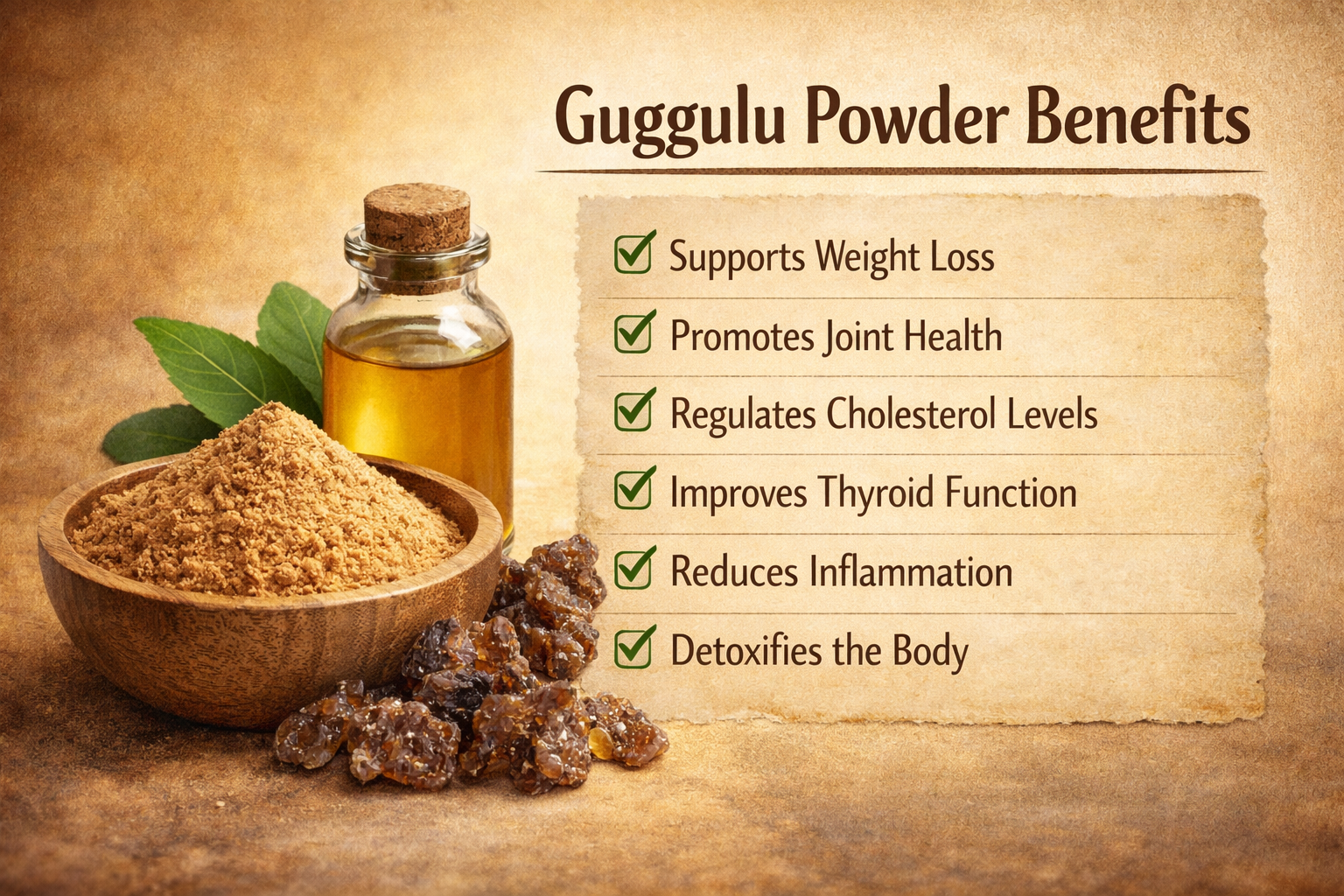
Guggulu is best known for its ability to support healthy cholesterol and lipid metabolism. Numerous clinical studies have demonstrated that guggulsterones, the active compounds in guggulu, help maintain healthy levels of total cholesterol, LDL cholesterol, and triglycerides while supporting HDL cholesterol. This makes guggulu a valuable herb for cardiovascular health.
2. Reduces Inflammation
Guggulu possesses potent anti‑inflammatory properties that benefit a wide range of conditions, including arthritis, joint pain, and inflammatory bowel disease. It inhibits inflammatory cytokines and enzymes, including NF‑κB and COX‑2, reducing pain, swelling, and tissue damage.
3. Supports Joint Health
Guggulu is one of the primary herbs in Ayurveda for managing arthritis and joint disorders. Its anti‑inflammatory, analgesic, and rejuvenative properties help reduce joint pain, improve mobility, and protect cartilage from degradation.
4. Promotes Healthy Weight Management
Guggulu’s lekhana (scraping) action helps metabolize excess fat tissue and supports healthy weight management. It enhances thyroid function, boosts metabolism, and helps reduce body fat accumulation. When combined with a healthy diet and lifestyle, guggulu can support sustainable weight management.
5. Supports Thyroid Function
Guggulu has been shown to support healthy thyroid function, particularly in cases of hypothyroidism. It helps stimulate thyroid activity and supports the conversion of T4 to T3, the active thyroid hormone. This makes guggulu valuable for individuals with sluggish metabolism.
6. Protects Cardiovascular Health
Beyond cholesterol management, guggulu supports overall cardiovascular health by reducing oxidative stress, improving circulation, and protecting blood vessel integrity. Its anti‑inflammatory properties also help reduce the risk of atherosclerosis.
7. Supports Detoxification
Guggulu is considered a powerful detoxifying herb that helps eliminate toxins (ama) from the body. It supports liver function, enhances lymphatic drainage, and helps clear stagnant tissues, making it valuable for cleansing protocols.
8. Reduces Acne and Skin Conditions
Guggulu’s anti‑inflammatory and antimicrobial properties make it effective for managing acne, boils, and other inflammatory skin conditions. It helps clear toxins from the blood and reduces the inflammation that contributes to breakouts.
9. Supports Respiratory Health
Guggulu helps manage respiratory conditions including asthma, bronchitis, and chronic cough. Its anti‑inflammatory and expectorant properties help clear congestion and soothe inflamed airways.
10. Enhances Wound Healing
Guggulu has been traditionally used to promote wound healing and tissue regeneration. Its antimicrobial and anti‑inflammatory properties help prevent infection while supporting the formation of healthy tissue.
Ayurvedic Properties of Guggulu
In Ayurveda, guggulu is classified with the following properties: Rasa (Taste) is bitter, pungent, and astringent. Virya (Energy) is heating (ushna). Vipaka (Post‑Digestive Effect) is pungent. Dosha Effect pacifies Vata and Kapha, and can increase Pitta when used in excess. Dhatu (Tissue Affinity) includes plasma, blood, muscle, fat, and bone tissues. Srotas (Channel Affinity) includes circulatory, digestive, respiratory, and musculoskeletal channels. It is considered a lekhana (scraping), rasayana (rejuvenative), vatahara (Vata‑pacifying), shothahara (anti‑inflammatory), and medohara (fat‑reducing) herb.
Guggulu Dosage: How Much Should You Take?
Dosage depends on the form of guggulu you are using and the specific formulation. For purified guggulu resin, the typical dosage is 500–1,000 mg per day, divided into two doses. For guggulu tablets or capsules (classical formulations), follow the dosage instructions on the product label, typically 1–2 tablets twice daily. For guggulu powder, 1–2 grams per day, divided into two doses, taken with warm water or honey. It is best to start with a lower dose and gradually increase while monitoring your body’s response. Guggulu is traditionally taken with warm water, honey, or as part of a specific formulation. Because guggulu is heating in nature, it is often combined with cooling herbs or taken with cooling liquids during the summer months.
When to Take Guggulu: Best Practices
For joint health and inflammation, take guggulu with meals to enhance absorption. For cholesterol management and weight support, consistent daily use over several months is recommended. For detoxification purposes, guggulu is typically taken for 1–3 months as part of a structured cleanse. Guggulu is best taken with warm water or a decoction of supportive herbs to enhance its therapeutic effects.
Guggulu Side Effects and Safety
Guggulu is generally safe when used appropriately and in purified form. However, some individuals may experience mild digestive upset, nausea, diarrhea, or skin rash, especially when starting with higher doses. Unpurified or raw guggulu can cause significant digestive irritation and should not be used. Pregnant and breastfeeding women should avoid guggulu, as it may have uterine stimulant effects. Individuals with hyperthyroidism should use guggulu with caution, as it may increase thyroid activity. Those taking blood‑thinning medications should consult a healthcare provider before using guggulu, as it may have mild anticoagulant effects. People with kidney disease or inflammatory bowel conditions should use guggulu under professional guidance. Always consult a qualified healthcare professional before starting any new supplement, especially if you have underlying health conditions or are taking prescription medications.
How to Choose a High‑Quality Guggulu Supplement
When selecting a guggulu product, look for purified guggulu (shuddha guggulu) which has been processed to remove impurities and reduce potential side effects. The formulation should clearly state whether it is plain guggulu or a classical combination (Yogaraj, Triphala, etc.). Look for products from reputable manufacturers that follow traditional preparation methods. Third‑party testing confirms purity, potency, and the absence of heavy metals or contaminants. Avoid products with unnecessary fillers, artificial colors, or preservatives. For maximum benefit, choose guggulu formulations that are specifically designed for your health goals.
Frequently Asked Questions About Guggulu
How long does guggulu take to work?
For cholesterol and weight management, significant improvements are typically seen after 8–12 weeks of consistent use. For joint pain and inflammation, many users notice improvements within 2–4 weeks.
Can I take guggulu every day?
Guggulu can be taken daily for specific health goals, typically for 2–6 months. For long‑term use, it is often cycled or taken under professional guidance.
Is guggulu safe for thyroid conditions?
Guggulu can be beneficial for hypothyroidism but should be used with caution in hyperthyroidism. Consult a healthcare provider before use.
Can I take guggulu with other herbs?
Yes, guggulu is traditionally used in combination with other herbs. It pairs well with Triphala, turmeric, ashwagandha, and ginger depending on the intended use.
Conclusion
Guggulu is truly a cornerstone of Ayurvedic medicine—a powerful resin that supports metabolic health, joint function, cardiovascular wellness, and detoxification. Its unique lekhana (scraping) action helps remove excess fat and toxins from the body, while its anti‑inflammatory properties provide relief from pain and swelling. Whether you are seeking to manage cholesterol, support joint health, promote healthy weight, or simply rejuvenate your body, guggulu offers profound benefits. As with any potent herb, quality and proper usage matter—choose purified, traditionally prepared products and use with respect for their potency. At Ayurveda Wellness USA, we are committed to bringing you the highest quality, evidence‑based information on Ayurvedic herbs. For trusted, pure, and sustainably sourced guggulu, explore our Atma Naturals product line, crafted with integrity and backed by science.