

Introduction
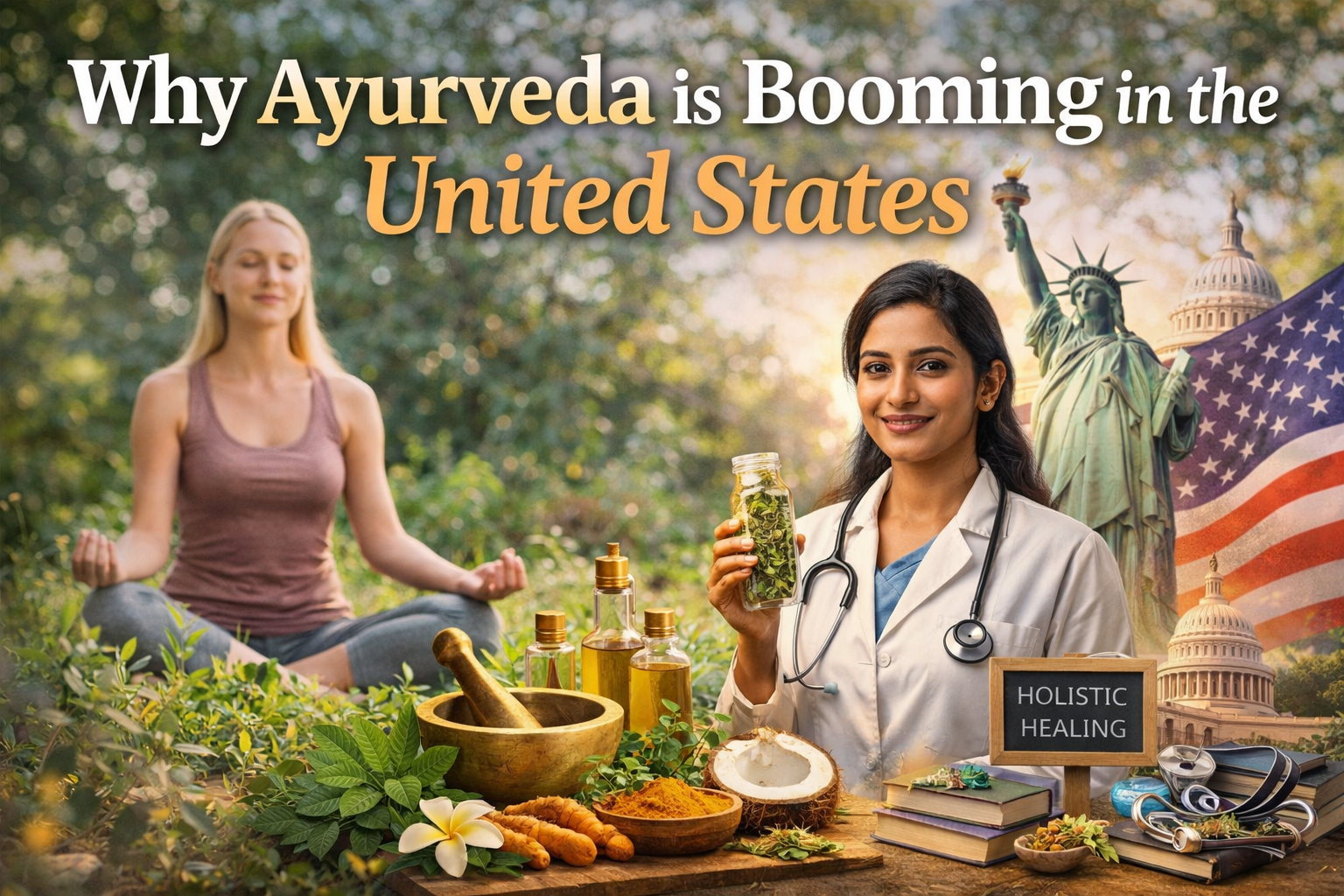
Over the past two decades, Ayurveda has experienced explosive growth in the United States. Once relegated to small alternative health circles, it is now a multi‑billion‑dollar industry, with products on pharmacy shelves, practitioners in nearly every city, and concepts like “dosha” and “agni” entering everyday wellness conversations. This boom is not accidental—it is the result of a convergence of cultural, economic, and healthcare trends that have made Ayurveda more relevant than ever. Understanding why Ayurveda is flourishing in America reveals deeper shifts in how people view health, what they seek from wellness, and why ancient wisdom is finding such fertile ground in the modern West.
The Chronic Disease Crisis
One of the most powerful drivers of Ayurveda’s popularity is the chronic disease epidemic. More than half of all Americans live with at least one chronic condition—heart disease, diabetes, autoimmune disorders, obesity, or mental health issues like anxiety and depression. Many feel that conventional medicine, while excellent for acute care and emergencies, offers limited solutions for these long‑term, lifestyle‑driven illnesses. Patients are often prescribed medications that manage symptoms but do not address underlying causes, and they may experience side effects that create new problems.
Ayurveda offers a different narrative. Instead of simply suppressing symptoms, it investigates the root causes—poor digestion, accumulated toxins, stress, and lifestyle misalignment. For someone struggling with irritable bowel syndrome, chronic fatigue, or autoimmune flares, this approach can be life‑changing. Word of mouth, patient success stories, and growing research have convinced millions that Ayurveda provides real answers where conventional medicine has fallen short.
The Demand for Personalization
American consumers are increasingly rejecting generic advice. The era of one‑size‑fits‑all dietary guidelines, standardized workout plans, and uniform health recommendations is waning. People want to know what works for them. Ayurveda’s dosha system—Vata, Pitta, Kapha—offers a sophisticated yet accessible framework for personalization. It explains why one person thrives on raw vegetables while another experiences bloating, why a morning run invigorates one friend but exhausts another, and why certain sleep patterns suit different constitutions.
This individualized approach resonates deeply with the broader trend toward personalized medicine, fueled by genetic testing, microbiome analysis, and wearable health data. Ayurveda complements these modern tools with an ancient understanding of individual nature, making it a natural fit for those seeking customized wellness.
The Shift Toward Prevention
Rising healthcare costs and a growing awareness of the limitations of reactive medicine have shifted attention toward prevention. Ayurveda’s core principle—“preserve the health of the healthy”—places prevention at the center. Practices like daily routines (dinacharya), seasonal adjustments (ritucharya), and mindful eating are designed to keep the body in balance before disease takes root.
In a country where many feel they are “waiting to get sick” before receiving care, Ayurveda offers an empowering alternative. It gives individuals actionable tools to maintain vitality, strengthen immunity, and reduce the risk of chronic illness. This proactive stance aligns perfectly with the growing wellness movement, which values self‑care and preventive measures over reactive treatments.
The Natural and Holistic Movement
Americans are increasingly seeking natural alternatives to pharmaceuticals. Concerns about side effects, dependency, and the long‑term impact of synthetic drugs have led many to explore herbal medicine, dietary therapies, and lifestyle interventions. Ayurveda, with its extensive pharmacopoeia of herbs, spices, and minerals, and its emphasis on food as medicine, fits this demand.
Herbs like ashwagandha (for stress), turmeric (for inflammation), and triphala (for digestion) have become bestsellers. Their popularity reflects a broader shift: consumers want solutions that work with the body’s natural intelligence, not against it. Ayurveda’s holistic view—addressing mind, body, senses, and spirit—appeals to those who feel that modern medicine treats only the physical, often overlooking emotional and spiritual dimensions of health.
The Influence of Yoga and Mindfulness
The explosive growth of yoga in America has been a major catalyst for Ayurveda’s boom. By the early 2000s, yoga had become a mainstream practice, with millions of Americans regularly practicing asana, pranayama, and meditation. Many yogis, seeking to deepen their practice, discovered Ayurveda as the sister science that explains how to align diet, lifestyle, and daily rhythms with the needs of the body.
Today, many yoga teacher trainings include Ayurveda modules, and Ayurvedic practitioners often incorporate yoga therapy into their recommendations. The synergy between the two has created a powerful ecosystem: yoga studios offer Ayurvedic workshops, retreats combine both sciences, and a community of practitioners has grown up around their integration.
Accessibility Through Digital Media
The internet and social media have accelerated Ayurveda’s spread. YouTube channels, Instagram accounts, and TikTok videos now offer free education on doshas, morning routines, and herbal remedies. Dosha quizzes, often shared widely, allow anyone to get a quick introduction. Online courses and telehealth consultations have made Ayurvedic care accessible even in rural areas, while e‑commerce has put high‑quality herbs at consumers’ fingertips.
This digital accessibility has lowered the barrier to entry. A person can learn tongue scraping, try golden milk, or take a dosha quiz in minutes. Once curious, they often seek deeper knowledge, leading to books, consultations, and long‑term practice. The ease with which Ayurvedic concepts can be sampled has been crucial to its mainstream adoption.
Celebrity Endorsements and Media Coverage
High‑profile figures have played a role in bringing Ayurveda into the spotlight. Deepak Chopra, perhaps the most famous Ayurvedic advocate, has written extensively and appeared on major media for decades. Celebrities like Gwyneth Paltrow, who featured Ayurvedic practices on her lifestyle platform, have introduced doshas and Panchakarma to millions. Wellness influencers regularly share their Ayurvedic routines, and media outlets from Vogue to The New York Times have published articles on Ayurveda’s benefits.
This visibility has legitimized Ayurveda in the eyes of mainstream consumers. When trusted public figures endorse a practice, it encourages wider adoption and reduces the perception of Ayurveda as “fringe.”
The Growth of Professional Infrastructure
The Ayurvedic profession in the United States has matured significantly. Organizations like the National Ayurvedic Medical Association (NAMA) have established educational standards, ethics guidelines, and a national credential. There are now dozens of accredited schools, hundreds of certified practitioners, and a growing number of integrative health clinics that offer Ayurvedic services.
This professionalization has improved quality, safety, and credibility. Patients can now find practitioners with rigorous training, and practitioners have clearer career paths. The development of a professional infrastructure has been essential to sustaining long‑term growth.
Integration with Functional and Integrative Medicine
Ayurveda has found allies in the broader integrative medicine community. Functional medicine practitioners, who seek root causes of disease, often incorporate Ayurvedic principles—especially the focus on digestion, gut health, and inflammation. Major medical centers like the University of California, San Diego, and the Cleveland Clinic have offered Ayurvedic services or educational programs. The National Center for Complementary and Integrative Health (NCCIH) has funded research on Ayurvedic herbs and approaches, adding scientific credibility.
This integration has made Ayurveda more accessible to those who might not seek out an “alternative” practitioner but are open to integrative care within a conventional setting.
The Wellness Economy
Finally, Ayurveda’s boom must be understood within the context of the massive wellness economy. The global wellness industry is valued at over $5 trillion, with the US market accounting for a significant share. Ayurveda has become a distinct and profitable segment, with products, services, retreats, and education generating billions. As the wellness economy continues to grow, Ayurveda is positioned to capture even more market share.
A Perfect Storm
The boom of Ayurveda in the United States is not the result of any single factor but a convergence of many. Chronic disease, demand for personalization, a shift toward prevention, the natural and holistic movement, the influence of yoga and mindfulness, digital accessibility, celebrity endorsements, professional infrastructure, integration with integrative medicine, and the wellness economy have all aligned to create a perfect storm of growth.
Ayurveda offers something that resonates deeply in modern America: a path to health that is personalized, preventive, natural, and holistic. It gives people tools they can use every day to feel better, sleep better, and navigate stress with greater resilience. As these needs continue to grow, so too will Ayurveda’s presence in American life.