
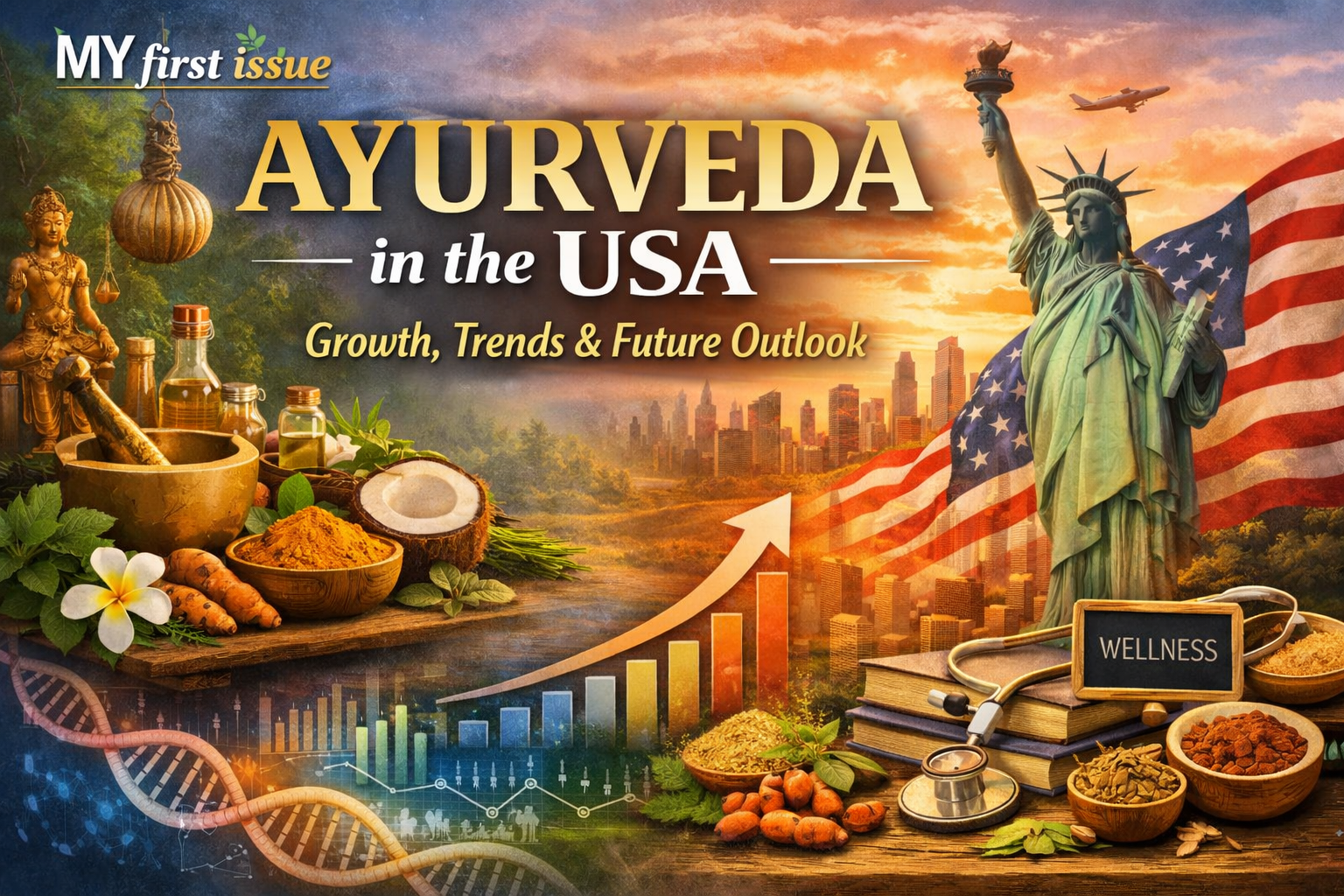
Growth, Trends & Future Outlook
Introduction
Once considered an esoteric tradition from a distant land, Ayurveda has quietly become one of the fastest‑growing complementary health systems in the United States. From turmeric lattes in urban cafes to ashwagandha capsules on pharmacy shelves, Ayurvedic principles and products are now woven into the fabric of American wellness culture. But this is not merely a trend—it is a fundamental shift in how millions of Americans approach health. As chronic disease rates climb and dissatisfaction with conventional medicine’s one‑size‑fits‑all model grows, Ayurveda offers a personalized, preventive, and deeply holistic alternative. This article explores the remarkable rise of Ayurveda in the USA, the trends driving its growth, and what the future holds for this ancient science in the modern West.
Historical Roots: Ayurveda’s Journey to America
Ayurveda first arrived in the United States in a meaningful way during the 1970s and 1980s. The transcendental meditation movement, led by Maharishi Mahesh Yogi, introduced a simplified version of Ayurveda to Western audiences. Around the same time, pioneering teachers like Dr. Vasant Lad, Dr. Robert Svoboda, and Dr. David Frawley began traveling to the US, offering lectures, publishing books, and training the first generation of American Ayurvedic practitioners. These early efforts laid the groundwork for what would become a thriving community.
The parallel rise of yoga—another Indian tradition—created a receptive audience. Many Americans who discovered the benefits of asana and meditation naturally gravitated toward Ayurveda as the sister science that explained how to eat, live, and structure their day for optimal balance. By the 1990s, the first formal Ayurvedic schools were established in the US, and professional organizations like the National Ayurvedic Medical Association (NAMA) began to set educational standards and ethics guidelines. The stage was set for the explosive growth that would follow in the 21st century.
Growth Drivers: Why Ayurveda Is Booming
Several factors have converged to fuel Ayurveda’s rapid expansion across the United States.
1. The Chronic Disease Crisis: More than half of Americans live with at least one chronic condition, and many feel that conventional medicine offers only symptom management, not true healing. Ayurveda’s focus on root causes—digestion, stress, toxins—resonates deeply with those seeking lasting solutions for autoimmune disorders, digestive issues, anxiety, and metabolic syndrome.
2. Demand for Personalized Health: The dosha system provides a framework for individualized care that feels empowering. In an era of genetic testing and functional medicine, consumers want more than generic advice. Ayurveda’s ability to tailor recommendations to one’s constitution aligns perfectly with this desire.
3. Wellness Industry Expansion: The US wellness market is now valued at over $1.5 trillion, and Ayurveda has become a significant segment. From luxury spas offering Panchakarma to corporate wellness programs incorporating Ayurvedic lifestyle coaching, the industry has embraced Ayurveda as both a premium offering and an accessible everyday tool.
4. Celebrity Endorsement and Social Media: High‑profile figures such as Deepak Chopra, Gwyneth Paltrow, and various influencers have brought Ayurveda into mainstream conversations. Instagram, YouTube, and TikTok are filled with Ayurvedic recipes, dosha quizzes, and morning routine tips, making the science accessible to younger demographics.
5. Increased Accessibility of Products and Education: Once difficult to find, high‑quality Ayurvedic herbs are now available at major retailers like Whole Foods, Walmart, and Amazon. Online education platforms offer courses from certified practitioners, and telehealth has made consultations accessible even in rural areas. This democratization of knowledge and products has accelerated adoption.
Current Trends Shaping Ayurveda in America
As Ayurveda integrates into the American landscape, several distinct trends are emerging.
Mainstream Integration: Ayurvedic herbs have entered the mainstream supplement market. Ashwagandha is now one of the best‑selling herbal supplements in the US, often found alongside vitamin D and probiotics. Turmeric, once a niche spice, is a billion‑dollar industry with applications ranging from golden milk to anti‑inflammatory supplements. Triphala, brahmi, and guduchi are gaining similar recognition.
Convergence with Functional and Integrative Medicine: Many functional medicine physicians now incorporate Ayurvedic principles—especially the emphasis on digestion, gut health, and circadian rhythms—into their protocols. Hospitals and clinics are increasingly offering Ayurvedic services alongside acupuncture, massage, and nutrition counseling.
Digital Ayurveda: Apps that calculate doshas, guided meditation with Ayurvedic themes, and virtual Panchakarma consultations have exploded. The pandemic accelerated telehealth adoption, making Ayurvedic care available to anyone with an internet connection. This digital shift has also enabled practitioners to reach clients far beyond traditional geographic hubs like California, New York, and New Mexico.
Ayurveda in the Workplace: Corporations seeking to reduce burnout and healthcare costs are turning to Ayurvedic stress‑management programs. Simple practices like mindful eating, daily routines, and breathwork are being taught to employees as tools for resilience.
Eco‑Conscious and Sustainable Ayurveda: American consumers increasingly demand ethically sourced, organic, and sustainably harvested herbs. Brands that prioritize transparency, fair trade, and environmental responsibility are gaining loyalty. This aligns with Ayurveda’s inherent respect for nature, making it a natural fit for the conscious consumer movement.
Cultural Adaptation: Ayurveda for American Lifestyles
One of Ayurveda’s strengths is its adaptability. While its core principles remain unchanged, practitioners and educators have found ways to make it accessible to American audiences without diluting its essence.
Simplified Entry Points: Concepts like doshas are often introduced through short online quizzes, making it easy for beginners to engage. Morning routine (dinacharya) is distilled into a few manageable steps—tongue scraping, oil pulling, warm water with lemon—that fit into busy mornings.
Culinary Integration: Ayurvedic cooking has been adapted using locally available ingredients. Kale, quinoa, and sweet potatoes now appear in Ayurvedic recipes alongside traditional mung dal and ghee. Cookbooks and blogs offer meal plans that respect doshic balance while using familiar foods.
Focus on Common Concerns: American practitioners often emphasize Ayurveda’s effectiveness for conditions prevalent in the US—anxiety, poor sleep, digestive discomfort, and weight management. By addressing these directly, they demonstrate relevance and build trust.
Hybrid Approaches: Many practitioners blend Ayurveda with coaching, functional medicine testing, and modern wellness modalities. This integrative style appeals to Americans who value both ancient wisdom and contemporary science.
Challenges on the Path Forward
Despite its growth, Ayurveda in the USA faces significant challenges that must be addressed for it to mature as a respected healthcare system.
Regulatory Landscape: Ayurveda is not licensed at the federal level, and state regulations vary widely. Practitioners often operate as “health consultants” rather than licensed medical professionals. This limits insurance reimbursement and can create confusion about scope of practice. Professional organizations like NAMA are working to establish credentialing and advocacy, but progress is gradual.
Quality Control and Safety: The heavy metal controversy—where some Ayurvedic products imported from India have been found to contain unsafe levels of lead, mercury, or arsenic—remains a concern. While reputable manufacturers rigorously test their products, unregulated imports can undermine consumer trust. Education around choosing GMP‑certified, third‑party tested brands is essential.
Research Gap: Although interest in Ayurvedic research is growing, the body of high‑quality clinical trials remains modest compared to conventional medicine. More studies on efficacy, safety, and mechanisms of action would strengthen Ayurveda’s credibility and support integration into mainstream healthcare.
Cultural Appropriation vs. Respectful Adaptation: As Ayurveda gains popularity, there is a risk of superficial or commercialized representations that strip the tradition of its depth. Balancing accessibility with authenticity is an ongoing conversation within the community.
Future Outlook: What Lies Ahead
Looking forward, the trajectory for Ayurveda in the United States appears bright. Market analysts project continued double‑digit growth for Ayurvedic products and services over the next decade. Several developments are likely to shape the coming years.
Integration into Healthcare Systems: As value‑based care and preventive medicine gain traction, more hospitals and insurance plans may include Ayurvedic services. Early examples—such as Ayurvedic programs at institutions like the University of California, San Diego—point toward broader acceptance.
Research and Academic Recognition: Increasing number of universities are offering Ayurvedic courses within integrative medicine departments. Collaborative studies with Indian research institutions and US medical schools could produce the evidence base needed for wider clinical adoption.
Technology and Personalization: Advances in AI and wearable technology may enable hyper‑personalized Ayurvedic recommendations—tracking sleep, digestion, and activity to suggest real‑time lifestyle adjustments. This could make Ayurveda even more relevant to tech‑savvy Americans.
Sustainable and Ethical Sourcing: Consumer demand for transparency will push the industry toward stricter sustainability standards. We may see certification programs that verify both quality and ethical sourcing, further differentiating responsible brands.
Deepening Practice: As the practitioner community matures, there will be a shift from simplified wellness advice to more sophisticated clinical practice. Advanced training, residencies, and mentorship will produce practitioners capable of managing complex cases and collaborating effectively with other healthcare providers.
Conclusion
Ayurveda’s journey from the forests of ancient India to the wellness centers of America is a testament to its timeless relevance. It offers something that resonates deeply in a fast‑paced, often fragmented society: a path to balance, a framework for personalized care, and a reminder that health is not merely the absence of disease but a vibrant state of harmony. The growth Ayurveda has experienced in the USA is not a passing fad but the emergence of a comprehensive healing tradition that meets the needs of a population hungry for connection, prevention, and authenticity. With continued attention to quality, education, and integration, Ayurveda is poised to become an enduring pillar of American wellness—honoring its ancient roots while adapting to serve the health challenges of today and tomorrow.