

Root Cause, Digestion, and the Path to Lasting Health
Introduction
With so many health systems available today, it can be confusing to understand what makes each one unique. Ayurveda is often described as holistic, natural, or ancient, but how does it actually work? At its core, Ayurveda operates on a few fundamental principles that distinguish it from conventional approaches. Instead of focusing on symptoms, it seeks the root cause of imbalance. Instead of a one-size-fits-all protocol, it treats each person as unique. And instead of relying solely on external interventions, it empowers individuals to use diet, lifestyle, and self-awareness to restore harmony. Understanding how Ayurveda works gives you the keys to not only manage illness but to cultivate lasting wellness.
Root Cause vs. Symptom Treatment
One of the most important distinctions between Ayurveda and conventional medicine lies in how they approach disease. Modern medicine often excels at suppressing symptoms—a headache is treated with a painkiller, heartburn with an antacid, anxiety with a sedative. While this can provide quick relief, it does not address why the symptom appeared in the first place. The underlying imbalance continues, often manifesting later as a more serious condition or as a cluster of seemingly unrelated symptoms.
Ayurveda, by contrast, views symptoms as messages from the body. A headache, for example, is not the disease itself but a sign that something is out of balance. The Ayurvedic practitioner asks: Is this caused by poor digestion? Is Vata aggravated due to irregular eating habits? Is there accumulated stress that has disturbed the nervous system? By identifying and treating the root cause, symptoms naturally resolve without being suppressed. This root-cause approach often requires patience, but it leads to lasting resolution rather than temporary relief.
The Body Systems Approach
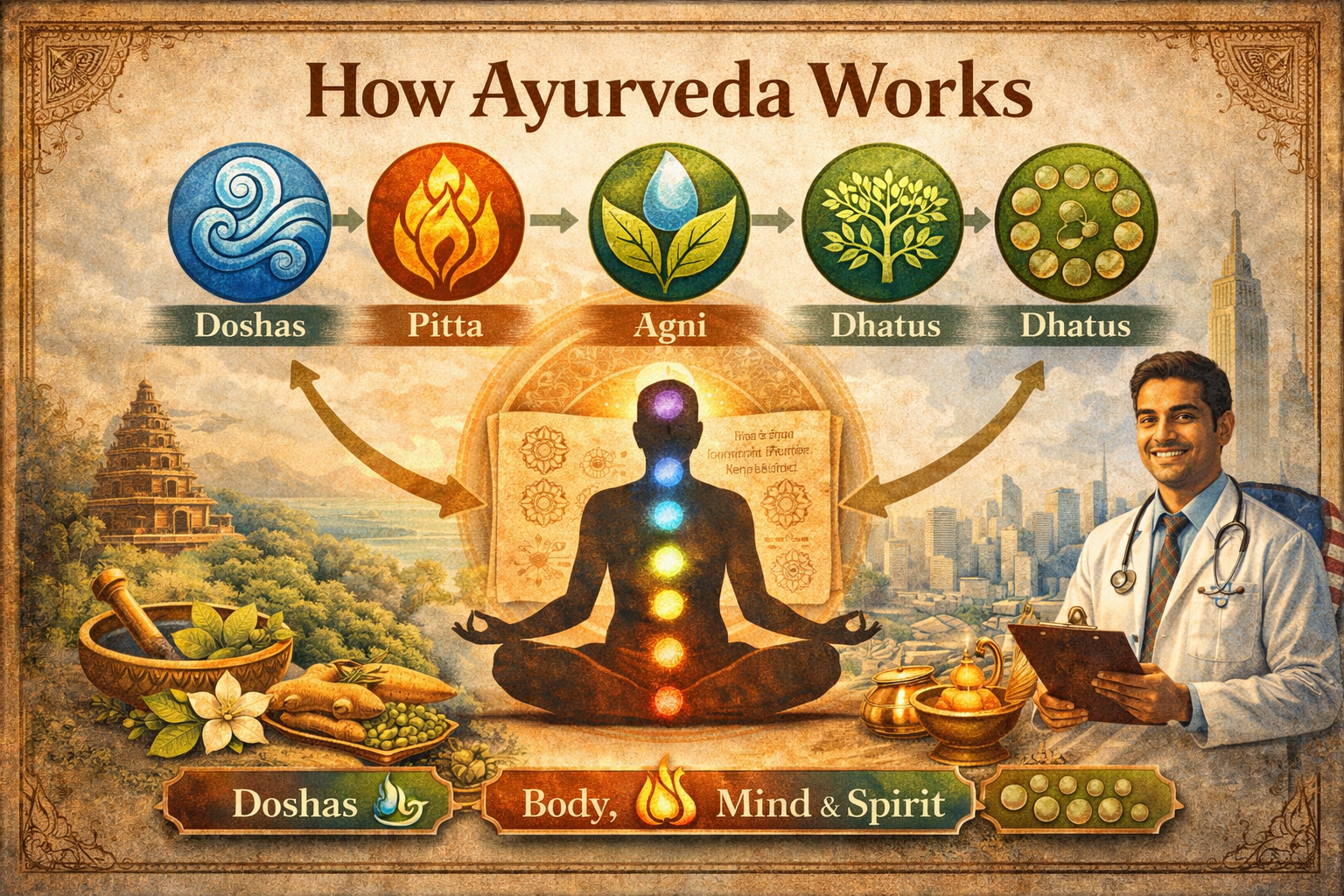
Ayurveda understands the human body not merely as a collection of organs but as an integrated network of systems that must function in harmony. The three doshas—Vata, Pitta, and Kapha—are the primary governing forces that coordinate all physiological and psychological activities. In addition to doshas, Ayurveda identifies seven tissues (dhatus), three wastes (malas), and countless channels (srotas) that transport nutrients and wastes throughout the body.
Health, in this view, is not simply the absence of disease markers but the smooth functioning of all these components. When a dosha becomes excessive or deficient, it disrupts the tissues and channels, leading to stagnation, toxicity, or depletion. Treatment is therefore aimed at restoring balance across all layers of the system—not just addressing a single organ or symptom. This integrated approach is especially effective for chronic and complex conditions that involve multiple body systems simultaneously.
Digestion: The Agni Concept
If there is one concept that holds the key to how Ayurveda works, it is Agni—digestive fire. Agni is responsible for breaking down food, absorbing nutrients, and eliminating waste. But its role goes far beyond physical digestion. Agni also governs mental digestion (how we process experiences and emotions) and cellular metabolism (how each cell assimilates nourishment and eliminates byproducts).
According to Ayurveda, most diseases begin with compromised Agni. When Agni is strong, food is digested efficiently, nutrients are properly assimilated, and waste is eliminated cleanly. When Agni is weak, irregular, or excessively intense, undigested food particles accumulate, leading to the formation of Ama (toxins). This is why Ayurveda places such strong emphasis on proper eating habits—eating at regular times, choosing foods appropriate for one’s constitution, and avoiding incompatible food combinations.
Agni is also closely tied to the doshas. Vata tends to produce an irregular Agni—sometimes strong, sometimes weak. Pitta naturally has a sharp, intense Agni, which can lead to hyperacidity if overstimulated. Kapha tends toward a slow, sluggish Agni, which can result in heaviness and congestion. Ayurveda offers specific dietary and lifestyle recommendations to balance each type of Agni, ensuring optimal digestion as the foundation of health.
Detox: The Ama Concept
Ama is a Sanskrit term that roughly translates to “undigested” or “unprocessed.” It refers to the toxic, sticky residue that forms when digestion is incomplete. Ama can accumulate not only from poorly digested food but also from unprocessed emotions, environmental toxins, and irregular lifestyle habits. When Ama accumulates, it clogs the body’s channels, weakens tissues, and creates the perfect environment for disease to take root.
One of the primary ways Ayurveda works is by preventing and eliminating Ama. Daily practices such as drinking warm water, eating light and easily digestible meals, and using spices like ginger and turmeric help stoke Agni and prevent Ama formation. For deeper cleansing, Ayurveda offers Panchakarma—a set of five detoxification therapies that gently remove accumulated Ama from the tissues. Panchakarma is not a quick cleanse but a carefully supervised process that includes preparatory treatments like oil massage and sweating, followed by elimination therapies tailored to the individual.
By clearing Ama, the body’s natural intelligence can resume its healing work. Tissues are nourished, channels open, and doshas return to balance. This is why many people experience profound improvements not only in physical symptoms but also in mental clarity and emotional well-being after detoxification.
Mind-Body Balance
Ayurveda does not separate the mind from the body. Thoughts, emotions, and beliefs directly influence physical health, and physical imbalances manifest as mental or emotional disturbances. The mind is considered a subtle organ with its own “digestive” capacity. When we experience stress, trauma, or negative thought patterns that are not properly processed, they become mental Ama—stagnant emotional energy that can disrupt the doshas and lead to anxiety, depression, or chronic stress-related illness.
How Ayurveda works on the mental level involves several approaches. First, it recognizes that each dosha has a psychological tendency: Vata types are prone to anxiety and worry; Pitta types to anger and perfectionism; Kapha types to attachment and lethargy. By balancing the doshas through diet, herbs, and lifestyle, the mind naturally becomes more stable. Second, Ayurveda recommends specific practices for mental hygiene, including meditation, breathwork (pranayama), mantra, and spending time in nature. These practices calm the nervous system, improve mental clarity, and help process emotions in a healthy way.
Mind-body balance also extends to the senses. What we see, hear, taste, smell, and touch constantly influences our state. Overstimulation from loud noises, violent media, or excessive screen time can aggravate Vata and disturb the mind. Ayurveda encourages sensory nourishment—pleasant aromas, soothing music, wholesome conversation—to create a supportive environment for healing.
Lifestyle Impact
In Ayurveda, what you do every day matters more than any occasional therapy. Lifestyle—vihara—is considered a primary medicine. The daily routine (dinacharya) is designed to align your body with the natural rhythms of the sun, moon, and seasons. Simple practices like waking before sunrise, scraping the tongue, performing self-massage with oil (abhyanga), and eating your largest meal at midday have profound cumulative effects on health.
Why does lifestyle work so powerfully in Ayurveda? Because it addresses the root of most imbalances: living out of sync with nature. When we stay up late, eat at irregular times, suppress natural urges, or remain sedentary, we create chronic stress on the body’s regulatory systems. Over time, these habits disturb the doshas, weaken Agni, and allow Ama to accumulate.
Conversely, consistent lifestyle practices strengthen the body’s resilience. A regular sleep schedule supports the nervous system. Daily movement improves circulation and elimination. Eating at consistent times trains Agni to be strong and predictable. Even small, sustained changes can shift a person from chronic imbalance to vibrant health. This is why Ayurveda places so much emphasis on patient participation—healing is not something done to you but something you actively cultivate through your daily choices.
Putting It All Together
How Ayurveda works can be summarized in a simple sequence: Identify the root cause of imbalance, strengthen digestion to prevent toxin formation, eliminate accumulated toxins, restore mind-body harmony, and support the process with a lifestyle aligned with nature. It is a system that respects the body’s innate wisdom and empowers the individual to become an active participant in their own healing. While it may take more time than simply suppressing a symptom, the results are often deeper, more sustainable, and more transformative. By understanding these principles, you can begin to see why Ayurveda has endured for thousands of years and why it offers such a relevant, practical path to health in today’s world.