Benefits, Uses, Dosage & Science – The Ultimate Guide
Introduction
Neem (Azadirachta indica) is one of the most powerful and versatile herbs in Ayurveda, often referred to as the “village pharmacy” or “nature’s drugstore.” For thousands of years, every part of this remarkable tree—leaves, bark, seeds, flowers, and oil—has been used for its potent antimicrobial, anti‑inflammatory, and detoxifying properties. In Sanskrit, neem is called Nimba, meaning “to give good health,” reflecting its profound role in promoting wellness and preventing disease. Unlike many herbs that target specific systems, neem is considered a comprehensive healing agent that purifies the blood, supports skin health, boosts immunity, and helps the body eliminate toxins. In modern times, neem has gained global recognition for its ability to manage skin conditions, support oral health, and combat a wide range of microbial infections. This comprehensive guide explores everything you need to know about neem, including its traditional uses, modern scientific research, proper dosage, and safety considerations.
What Is Neem?
Neem is a fast‑growing evergreen tree native to the Indian subcontinent and parts of Southeast Asia. It thrives in tropical and semi‑tropical regions and has been naturalized throughout Africa, the Middle East, and the Americas. The tree can grow up to 15–20 meters in height and produces small, white, fragrant flowers and olive‑like fruits. Every part of the neem tree has medicinal applications, with the leaves, bark, and seeds being the most commonly used. The primary active constituents include azadirachtin, nimbin, nimbidin, nimbolide, and various limonoids, all of which contribute to its potent antimicrobial, anti‑inflammatory, and antioxidant properties. In Ayurveda, neem is classified as a kushtaghna (skin‑healing), vishaghna (detoxifying), and krimighna (antiparasitic) herb.
Neem Benefits: What the Science Says
1. Purifies the Blood
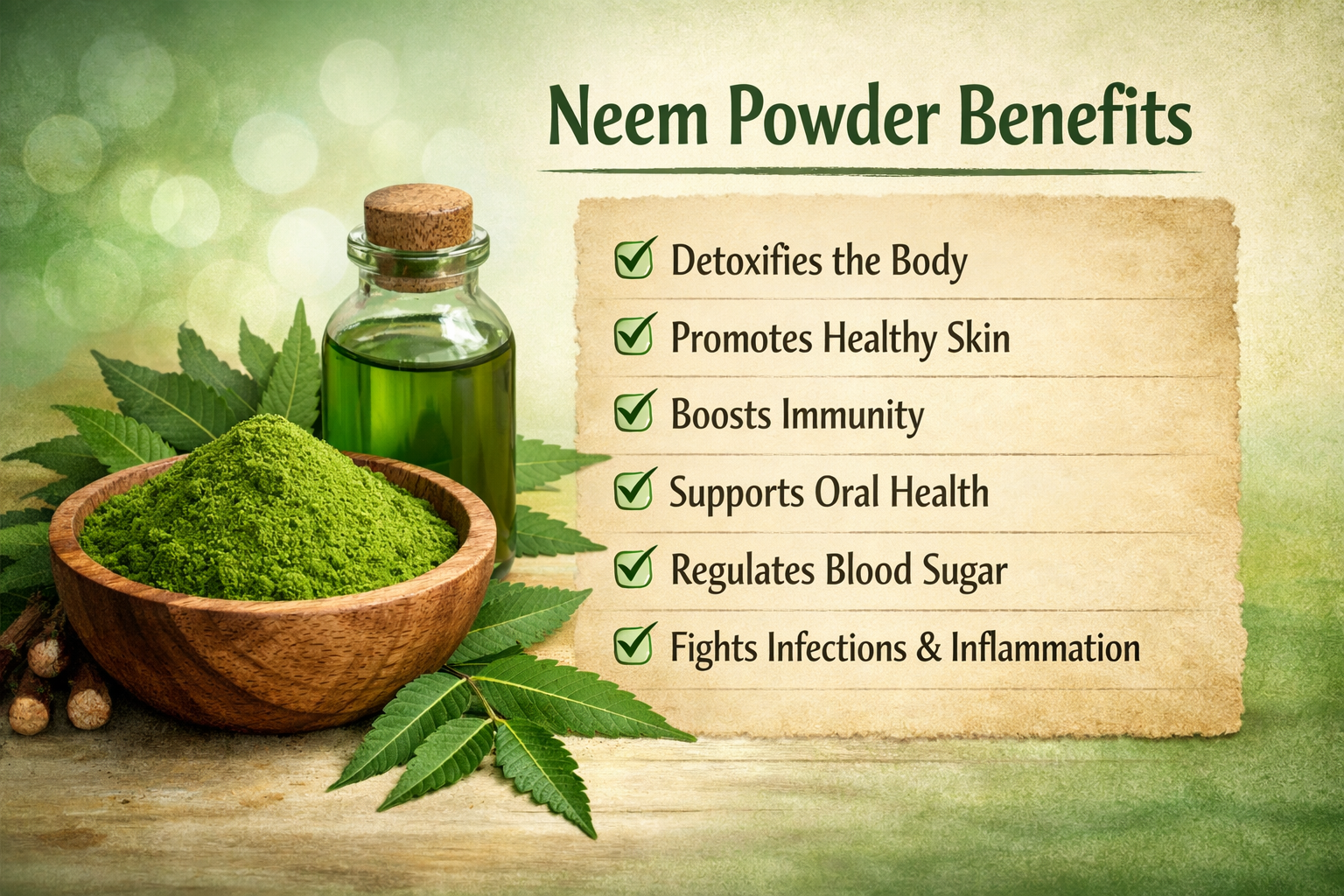
Neem is one of the most powerful blood purifiers in Ayurveda. It helps remove toxins (ama) from the bloodstream, improves circulation, and supports the liver’s detoxification pathways. This blood‑purifying action is the foundation for many of neem’s benefits, particularly for skin health.
2. Supports Skin Health
Neem is the premier herb for managing a wide range of skin conditions. Its antimicrobial, anti‑inflammatory, and wound‑healing properties make it effective for acne, eczema, psoriasis, dermatitis, fungal infections, and minor wounds. Both internal and external use of neem helps clear skin, reduce inflammation, and promote healing.
3. Fights Bacterial and Fungal Infections
Neem possesses potent broad‑spectrum antimicrobial activity. It has been shown to be effective against a wide range of bacteria, including Staphylococcus aureus, Escherichia coli, and Streptococcus species, as well as various fungi, including Candida albicans. This makes neem valuable for both skin infections and internal microbial imbalances.
4. Supports Oral Health
Neem has been traditionally used for oral hygiene for centuries. Chewing neem twigs (called “datun”) cleans the teeth, strengthens gums, and prevents cavities and gum disease. Modern research confirms that neem effectively inhibits the bacteria responsible for plaque, gingivitis, and periodontal disease.
5. Reduces Inflammation
Neem possesses powerful anti‑inflammatory properties that benefit a wide range of conditions, including arthritis, joint pain, and inflammatory skin conditions. Its active compounds inhibit inflammatory cytokines and enzymes, reducing pain, swelling, and tissue damage.
6. Boosts Immunity
Neem enhances immune function through multiple mechanisms. It increases the activity of macrophages and natural killer cells, supports antibody production, and helps the body fight infections. Its immunomodulatory properties make it valuable for both preventing and managing illness.
7. Supports Digestive Health
Neem helps manage digestive disorders including indigestion, bloating, constipation, and intestinal parasites. Its antimicrobial properties help balance gut microbiota, while its bitter taste stimulates digestive secretions and supports liver function.
8. Helps Manage Blood Sugar
Numerous studies have demonstrated that neem helps lower blood glucose levels and improves insulin sensitivity. It supports pancreatic function and may be beneficial for individuals with type 2 diabetes or metabolic syndrome when used alongside conventional care.
9. Protects Against Oxidative Stress
Neem is rich in antioxidants that protect cells from oxidative damage. Its flavonoids, carotenoids, and other phenolic compounds neutralize free radicals, slow the aging process, and reduce the risk of chronic diseases.
10. Supports Hair and Scalp Health
Neem oil and neem‑based hair products are widely used to promote scalp health, reduce dandruff, strengthen hair follicles, and prevent hair loss. Its antifungal and antimicrobial properties help manage scalp conditions that can interfere with healthy hair growth.
Ayurvedic Properties of Neem
In Ayurveda, neem is classified with the following properties: Rasa (Taste) is bitter, pungent, and astringent. Virya (Energy) is cooling (sheeta). Vipaka (Post‑Digestive Effect) is pungent. Dosha Effect pacifies Pitta and Kapha, and can increase Vata when used in excess. Dhatu (Tissue Affinity) includes plasma, blood, muscle, and fat tissues. Srotas (Channel Affinity) includes circulatory, digestive, and lymphatic channels. It is considered a kushtaghna (skin‑healing), vishaghna (detoxifying), krimighna (antiparasitic), jwaraghna (fever‑reducing), and rasayana (rejuvenative) herb. Neem is also considered a pitta shamaka herb due to its cooling properties.
Neem Dosage: How Much Should You Take?
Dosage depends on the form of neem you are using and the desired effect. For neem leaf powder, the typical dosage is 1–2 grams per day, divided into two doses, taken with warm water or honey. For capsules, 500–1,000 mg per day of whole leaf powder is typical. For neem tincture (liquid extract), 2–4 ml up to three times daily. For neem oil, external use only—do not take neem oil internally. For topical applications, neem leaf paste can be applied directly to the skin for acne, eczema, or minor wounds. It is best to start with a lower dose and gradually increase while monitoring your body’s response. Neem is traditionally taken with honey, warm water, or as part of a detoxification protocol under professional guidance.
When to Take Neem: Best Practices
For general wellness and blood purification, take neem in the morning on an empty stomach. For skin conditions, consistent daily use over several months is typically needed to see significant results. For acute infections, neem can be taken two to three times daily until symptoms resolve. Because neem is cooling in nature, it is especially beneficial for individuals with Pitta constitution or during the summer months.
Neem Side Effects and Safety
Neem is generally safe when used appropriately, but it is a potent herb that should be used with respect. Some individuals may experience mild digestive upset, nausea, or loose stools, especially when taking higher doses. Neem oil is for external use only and should never be taken internally. Pregnant and breastfeeding women should avoid neem, as it may have abortifacient effects and can affect fertility. Individuals with autoimmune conditions should use neem with caution, as its immunomodulatory effects may theoretically influence autoimmune activity. Those taking medications for diabetes should monitor blood glucose levels closely, as neem may have hypoglycemic effects. People with low blood pressure should use neem with caution, as it may lower blood pressure. Always consult a qualified healthcare professional before starting any new supplement, especially if you have underlying health conditions or are taking prescription medications.
How to Choose a High‑Quality Neem Supplement
When selecting a neem product, look for organic certification to ensure no pesticides or synthetic fertilizers are present. The botanical name should be clearly stated as Azadirachta indica. For neem leaf powder, look for products made from pure, dried leaves without fillers or additives. For neem oil, choose cold‑pressed, organic oil for topical use. Third‑party testing confirms purity, potency, and the absence of heavy metals or contaminants. Avoid products with unnecessary fillers, artificial colors, or preservatives.
Frequently Asked Questions About Neem
How long does neem take to work?
For skin conditions, many users notice improvements within 2–4 weeks of regular internal and external use. For blood purification and general wellness, consistent use over 1–2 months yields the best results.
Can I take neem every day?
Neem can be taken daily for short periods, typically 1–3 months, as part of a detoxification or skin health protocol. For long‑term use, it is best to cycle neem or use it under professional guidance.
Is neem safe for children?
Neem can be used for children in very small doses for skin conditions or parasitic infections, but it should be used under the guidance of a qualified practitioner.
Can I use neem oil on my face?
Yes, neem oil can be used topically for acne and other skin conditions, but it should be diluted with a carrier oil such as coconut or jojoba oil to prevent irritation.
Conclusion
Neem is truly a powerhouse herb—a comprehensive healing agent that purifies the blood, supports skin health, fights infections, and promotes overall wellness. Its status as the “village pharmacy” reflects its remarkable versatility and effectiveness. Whether you are seeking to clear chronic skin conditions, support your immune system, detoxify your body, or simply enhance your overall health, neem offers profound benefits. As with any potent herb, quality and proper usage matter—choose organic, traditionally prepared products and use with respect for its potency. At Ayurveda Wellness USA, we are committed to bringing you the highest quality, evidence‑based information on Ayurvedic herbs. For trusted, pure, and sustainably sourced neem, explore our Atma Naturals product line, crafted with integrity and backed by science.
