

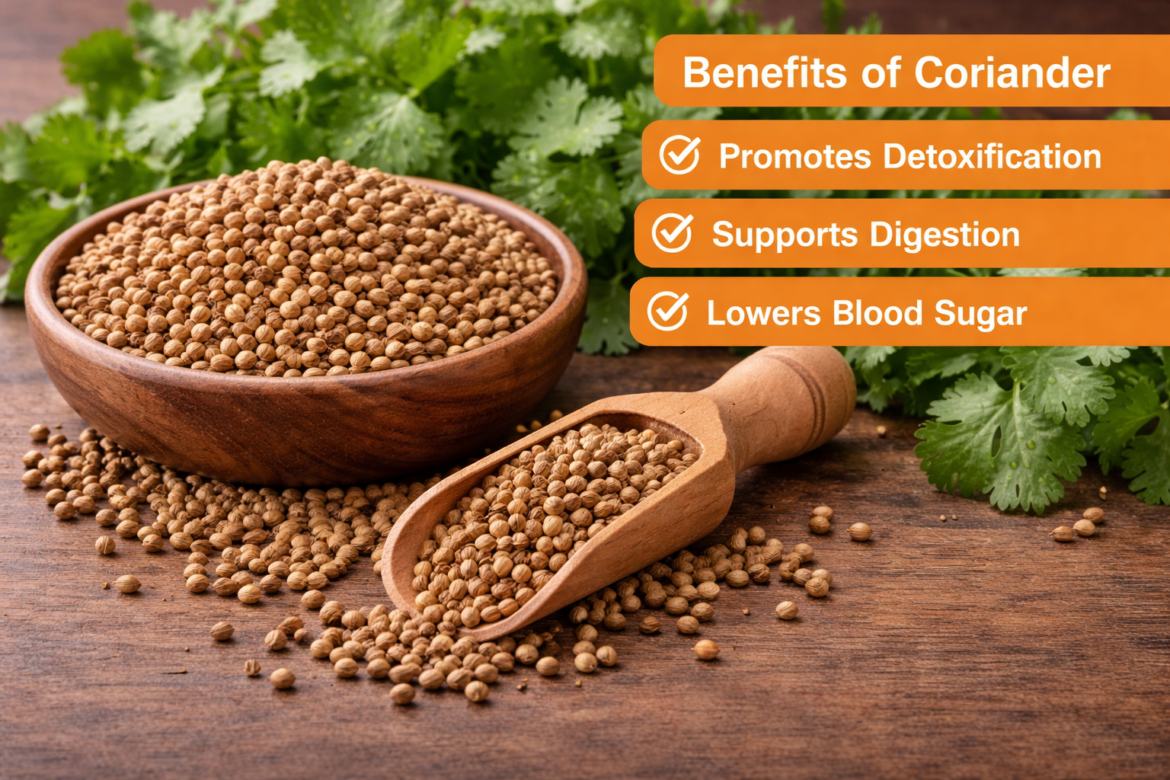
Benefits, Uses, Dosage & Science – The Ultimate Guide
Introduction
Coriander (Coriandrum sativum), known as Dhania in Sanskrit and throughout India, is one of the most beloved and versatile herbs in Ayurveda. Both the fresh leaves (cilantro) and the dried seeds have been treasured for thousands of years for their culinary and medicinal properties. In Ayurveda, coriander is considered a cooling, soothing herb that supports digestion, detoxification, skin health, and hormonal balance. Its unique ability to pacify Pitta dosha makes it especially valuable for individuals with inflammatory conditions, skin irritations, and digestive heat. In modern times, coriander has gained scientific attention for its potent antioxidant, anti‑inflammatory, antimicrobial, and blood sugar‑balancing properties. This comprehensive guide explores everything you need to know about coriander, including its traditional uses, modern scientific research, proper dosage, and safety considerations.
What Is Coriander?
Coriander is an annual herb native to the Mediterranean region, Western Asia, and India. Both the fresh leaves (commonly called cilantro in the Americas) and the dried seeds are used medicinally and culinarily. The seeds are small, round, and yellowish‑brown with a warm, citrusy, slightly sweet flavor. The leaves have a distinct, bright, citrusy flavor. The primary active constituents include volatile oils (such as linalool, geraniol, and borneol), flavonoids, phenolic acids, and dietary fiber. In Ayurveda, coriander is classified as a deepana (digestive stimulant), pachana (digestive), anulomana (promoting proper movement), jwaraghna (fever‑reducing), varnya (complexion‑enhancing), and tridoshic (balancing all three doshas) herb, with particular affinity for Pitta dosha.
Coriander Benefits: What the Science Says
1. Aids Digestion
Coriander is one of the most effective herbs for digestive health. It stimulates digestive enzymes, reduces gas and bloating, and helps relieve indigestion, nausea, stomach cramps, and heartburn. Its carminative properties help expel gas from the digestive tract, while its cooling properties soothe inflammation in the stomach and intestines.
2. Supports Detoxification
Coriander is a powerful detoxifying herb that helps eliminate heavy metals and other toxins from the body. It supports liver function, enhances bile flow, and promotes the elimination of waste products through the kidneys. Coriander has been studied for its ability to bind to heavy metals such as lead, mercury, and arsenic, facilitating their removal from the body.
3. Supports Healthy Blood Sugar
Numerous studies have demonstrated that coriander helps lower blood glucose levels and improve insulin sensitivity. Its active compounds help enhance glucose uptake by cells and support healthy pancreatic function, making it valuable for individuals with type 2 diabetes or metabolic syndrome.
4. Promotes Skin Health
Coriander is traditionally used to support skin health both internally and externally. Its anti‑inflammatory, antimicrobial, and antioxidant properties help manage acne, eczema, psoriasis, and skin irritations. Coriander water or paste is often applied topically to soothe rashes, reduce redness, and promote healing.
5. Reduces Inflammation
Coriander possesses powerful anti‑inflammatory properties that benefit a wide range of conditions, including arthritis, digestive inflammation, and skin conditions. It inhibits inflammatory cytokines and enzymes, reducing pain and swelling.
6. Acts as a Potent Antioxidant
Coriander is rich in antioxidants that protect cells from oxidative damage. Its flavonoids, phenolic compounds, and volatile oils neutralize free radicals, reduce oxidative stress, and help slow the aging process.
7. Supports Heart Health
Coriander helps maintain healthy cholesterol levels, supports healthy blood pressure, and provides antioxidant protection for blood vessels. Its high fiber content helps bind and eliminate cholesterol from the body.
8. Fights Infections
Coriander has potent antimicrobial, antibacterial, and antifungal properties. It has been shown to be effective against a wide range of pathogens, including Escherichia coli, Salmonella, and various fungi, helping the body fight infections naturally.
9. Supports Women’s Health
Coriander is traditionally used to support menstrual health, reduce PMS symptoms, and promote hormonal balance. Its cooling, soothing properties help reduce menstrual cramps and regulate menstrual flow.
10. Supports Respiratory Health
Coriander helps clear congestion, soothe coughs, and support healthy lung function. Its expectorant properties help expel mucus from the respiratory tract, while its anti‑inflammatory effects soothe irritated airways.
Ayurvedic Properties of Coriander
In Ayurveda, coriander is classified with the following properties: Rasa (Taste) is sweet, bitter, and astringent. Virya (Energy) is cooling (sheeta). Vipaka (Post‑Digestive Effect) is sweet. Dosha Effect pacifies Vata, Pitta, and Kapha, making it tridoshic, with particular affinity for Pitta. Dhatu (Tissue Affinity) includes plasma, blood, muscle, and fat tissues. Srotas (Channel Affinity) includes digestive, circulatory, urinary, and skin channels. It is considered a deepana (digestive stimulant), pachana (digestive), anulomana (promoting proper movement), jwaraghna (fever‑reducing), varnya (complexion‑enhancing), trishna nigrahana (thirst‑relieving), and mutrala (diuretic) herb.
Coriander Dosage: How Much Should You Take?
Dosage depends on the form of coriander you are using. For coriander seeds, 1–3 teaspoons (approximately 2–5 grams) per day, either chewed, added to food, or taken as tea, is typical. For coriander powder, 1–3 grams per day, taken with warm water or honey. For coriander seed tea, steep 1 teaspoon of crushed seeds in 8 ounces of hot water for 10 minutes, up to 2–3 cups daily. For fresh coriander leaves (cilantro), generous amounts can be consumed daily. For capsules, 500–1,500 mg per day is common. For coriander water (soaked seeds overnight), drink the water in the morning on an empty stomach. It is best to start with a lower dose and gradually increase while monitoring your body’s response.
When to Take Coriander: Best Practices
For digestive support, take coriander before or after meals. For detoxification, take coriander water in the morning on an empty stomach. For skin health, consistent daily use is recommended. For blood sugar support, take it with meals. Because coriander is cooling in nature, it is especially beneficial during the summer months or for individuals with Pitta constitution.
Coriander Side Effects and Safety
Coriander is generally considered very safe for culinary and medicinal use. However, some individuals may experience mild digestive upset, allergic reactions, or skin sensitivity, especially when taking very high doses. Pregnant and breastfeeding women can safely consume coriander in culinary amounts and therapeutic doses. Individuals with gallstones should consult a healthcare provider before using therapeutic doses, as coriander may stimulate bile flow. Those taking medications for diabetes or blood pressure should monitor their levels closely, as coriander may have hypoglycemic and hypotensive effects. Always consult a qualified healthcare professional before starting any new supplement, especially if you have underlying health conditions or are taking prescription medications.
How to Choose a High‑Quality Coriander
When selecting coriander, look for organic certification to ensure no pesticides or synthetic fertilizers are present. Seeds should be uniform, aromatic, and free from debris. For powder, choose products that are freshly ground and stored in airtight containers to preserve the volatile oils. Fresh coriander leaves (cilantro) should be bright green, crisp, and free from yellowing or wilting. Third‑party testing confirms purity and potency. Avoid products with artificial flavors, fillers, or additives.
Frequently Asked Questions About Coriander
How long does coriander take to work?
For digestive relief, many users notice effects within minutes to hours of consumption. For detoxification and skin benefits, 2–4 weeks of consistent use is typically needed to see significant results.
Can I take coriander every day?
Yes, coriander is safe for daily, long‑term use in culinary amounts and therapeutic doses.
Is coriander safe during pregnancy?
Yes, coriander is generally considered safe during pregnancy in culinary amounts and therapeutic doses.
What is the difference between coriander seeds and cilantro?
Coriander seeds are the dried seeds of the Coriandrum sativum plant, with a warm, citrusy flavor. Cilantro refers to the fresh leaves of the same plant, with a bright, pungent flavor. Both have medicinal properties, though they are used differently.
Conclusion
Coriander is truly a versatile and powerful herb—a gentle yet effective remedy that supports digestion, detoxification, skin health, and hormonal balance. Its unique cooling properties make it one of the most valuable herbs for pacifying Pitta dosha and managing inflammatory conditions. Whether used as a spice in cooking, taken as a tea, or applied topically for skin health, coriander offers profound benefits for the body and mind. As with any herb, quality matters—choose organic, fresh coriander for the best results. At Ayurveda Wellness USA, we are committed to bringing you the highest quality, evidence‑based information on Ayurvedic herbs. For trusted, pure, and sustainably sourced coriander, explore our Atma Naturals product line, crafted with integrity and backed by science.