

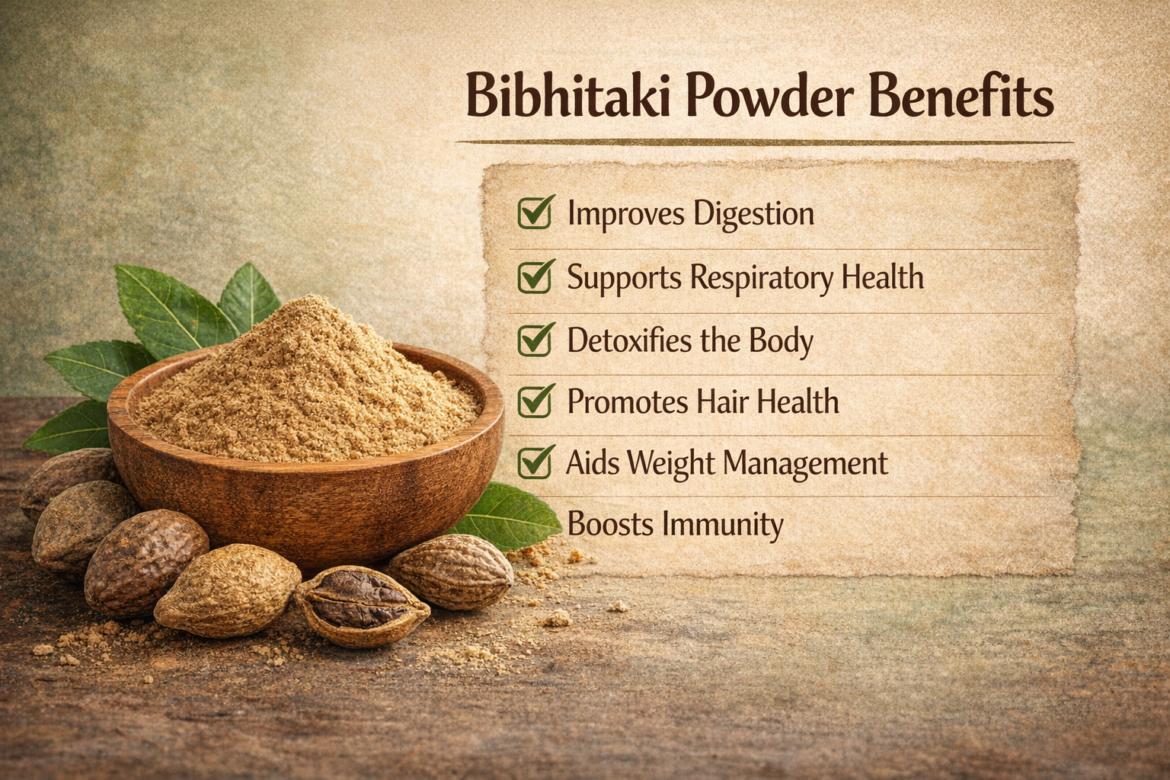
Benefits, Uses, Dosage & Science – The Ultimate Guide
Introduction
Bibhitaki (Terminalia bellirica) is one of the three fruits that make up the famous Ayurvedic formulation Triphala, yet it deserves recognition in its own right as a powerful healing herb. Known as “Bibhitaki” in Sanskrit, which translates to “that which keeps away disease,” this fruit has been used for thousands of years to support respiratory health, balance Kapha dosha, promote healthy weight, and rejuvenate the body. In Ayurveda, Bibhitaki is considered a rasayana (rejuvenative) with particular affinity for the respiratory system, making it one of the most important herbs for managing cough, cold, asthma, and other respiratory conditions. Its name also reflects its traditional use for promoting fearlessness and courage, both physically and spiritually. In modern times, Bibhitaki has gained scientific attention for its potent antioxidant, anti‑inflammatory, hepatoprotective, antimicrobial, and immunomodulatory properties. This comprehensive guide explores everything you need to know about Bibhitaki, including its traditional uses, modern scientific research, proper dosage, and safety considerations.
What Is Bibhitaki?
Bibhitaki is the fruit of the Terminalia bellirica tree, a large deciduous tree native to India, Nepal, Sri Lanka, and Southeast Asia. The fruit is ovoid, grayish‑brown in color, and has a distinctive taste that is primarily astringent and bitter, with a slightly sweet aftertaste. The fruit contains a complex array of bioactive compounds including tannins (such as ellagic acid, gallic acid, and chebulagic acid), flavonoids, lignans, triterpenoids, and various phenolic compounds. In Ayurveda, Bibhitaki is classified as a kapha shamaka (Kapha‑pacifying) herb with secondary benefits for Vata and Pitta when used appropriately. It is one of the three ingredients in Triphala, where it provides its unique Kapha‑balancing and respiratory‑supporting properties. Beyond Triphala, Bibhitaki is used as a standalone herb for respiratory health, weight management, detoxification, and eye health.
Bibhitaki Benefits: What the Science Says
1. Supports Respiratory Health
Bibhitaki is the premier herb in Ayurveda for respiratory health. It helps clear excess mucus from the lungs, soothes irritated airways, and supports healthy lung function. Its expectorant, bronchodilatory, and anti‑inflammatory properties make it valuable for managing cough, cold, bronchitis, asthma, allergies, and chronic respiratory conditions. It helps expel phlegm and reduces congestion.
2. Balances Kapha Dosha
Bibhitaki is primarily used to balance Kapha dosha, which is associated with heaviness, congestion, excess mucus, lethargy, and water retention. By reducing Kapha, Bibhitaki helps promote lightness, clarity, energy, and healthy respiratory function. It is considered one of the best herbs for Kapha-related disorders.
3. Supports Healthy Weight Management
Bibhitaki’s Kapha‑reducing and metabolism‑enhancing properties make it valuable for healthy weight management. It helps reduce excess fat tissue (meda dhatu), improves digestion, enhances metabolism, and supports the body’s natural ability to maintain a healthy weight. It also helps reduce water retention and bloating.
4. Acts as a Potent Antioxidant
Bibhitaki is rich in polyphenols, tannins, flavonoids, and other antioxidant compounds that protect cells from oxidative damage. Its antioxidant capacity helps slow the aging process, reduce oxidative stress, and protect against chronic diseases such as cardiovascular disease, diabetes, and cancer.
5. Supports Liver Health
Bibhitaki is considered a hepatoprotective herb, meaning it protects the liver from damage caused by toxins, alcohol, medications, and viral infections. It supports liver detoxification pathways, enhances bile flow, helps maintain healthy liver enzyme levels, and promotes regeneration of liver tissue.
6. Reduces Inflammation
Bibhitaki possesses powerful anti‑inflammatory properties that benefit a wide range of conditions, including arthritis, respiratory inflammation, digestive inflammation, and skin conditions. It inhibits inflammatory cytokines and enzymes, including COX-2 and lipoxygenase, reducing pain, swelling, and tissue damage.
7. Supports Digestive Health
Bibhitaki helps improve digestion, reduce gas and bloating, and support regular elimination. Its mild laxative properties help maintain bowel regularity without causing dependency. It also helps eliminate toxins (ama) from the digestive tract and supports healthy gut microbiota.
8. Promotes Cardiovascular Health
Bibhitaki supports heart health by helping maintain healthy cholesterol levels, reducing triglycerides, lowering blood pressure, and protecting blood vessel integrity. Its antioxidant and anti‑inflammatory properties help reduce the risk of atherosclerosis and cardiovascular disease.
9. Boosts Immunity
Bibhitaki enhances immune function through its antimicrobial, antiviral, and immunomodulatory properties. It has been shown to be effective against a range of bacterial, viral, and fungal pathogens, helping the body fight infections and supporting overall immune resilience.
10. Supports Eye Health
Bibhitaki is traditionally used to support eye health and vision. Its antioxidant properties help protect the delicate tissues of the eyes from oxidative damage and age‑related degeneration. It is often used in Ayurvedic eye formulations and as an eye wash for conjunctivitis and other eye conditions.
11. Promotes Hair and Skin Health
Bibhitaki is used both internally and externally to support healthy hair and skin. It helps manage dandruff, promote hair growth, and improve scalp health. Its anti‑inflammatory and antimicrobial properties help manage acne, eczema, and other skin conditions.
Ayurvedic Properties of Bibhitaki
In Ayurveda, Bibhitaki is classified with the following properties: Rasa (Taste) is astringent and bitter. Virya (Energy) is heating (ushna). Vipaka (Post‑Digestive Effect) is sweet. Dosha Effect pacifies Kapha and Vata, and can increase Pitta when used in excess. Dhatu (Tissue Affinity) includes plasma, blood, muscle, fat, and respiratory tissues. Srotas (Channel Affinity) includes respiratory, digestive, circulatory, and urinary channels. It is considered a rasayana (rejuvenative), kapha shamaka (Kapha‑pacifying), kasa hara (cough‑relieving), shwasa hara (asthma‑relieving), chakshushya (beneficial for the eyes), keshya (beneficial for hair), and medohara (fat‑reducing) herb.
Bibhitaki Dosage: How Much Should You Take?
Dosage depends on the form of Bibhitaki you are using and the desired effect. For Bibhitaki powder, the typical dosage is 1–3 grams per day (approximately ½ to 1 teaspoon), divided into two doses, taken with warm water, honey, or ghee. For capsules, 500–1,500 mg per day is common. For decoction (tea), steep 1 teaspoon of powder in 8 ounces of hot water for 10 minutes, up to 2 cups daily. For respiratory support, it is often taken with honey. For weight management, it is taken with warm water before meals. It is best to start with a lower dose and gradually increase while monitoring your body’s response.
When to Take Bibhitaki: Best Practices
For respiratory health, take Bibhitaki in the morning and evening with honey. For weight management and metabolic support, take it before meals. For general wellness, it can be taken once daily. For eye health, Bibhitaki can be used as an eye wash or taken internally. Because Bibhitaki is heating in nature, it is often paired with cooling substances or taken with ghee for individuals with Pitta constitution.
Bibhitaki Side Effects and Safety
Bibhitaki is generally considered very safe for long‑term use. However, some individuals may experience mild digestive upset, loose stools, nausea, or dry mouth, especially when taking higher doses. Reducing the dose usually resolves these symptoms. Pregnant and breastfeeding women should consult a healthcare provider before using Bibhitaki. Individuals with chronic diarrhea, dehydration, or emaciation should avoid Bibhitaki. Those taking medications for diabetes or blood pressure should monitor their levels closely, as Bibhitaki may have mild hypoglycemic and hypotensive effects. Always consult a qualified healthcare professional before starting any new supplement, especially if you have underlying health conditions or are taking prescription medications.
How to Choose a High‑Quality Bibhitaki Supplement
When selecting a Bibhitaki product, look for organic certification to ensure no pesticides or synthetic fertilizers are present. The botanical name should be clearly stated as Terminalia bellirica. For Bibhitaki powder, look for products made from the dried fruit without fillers or additives. The powder should have a characteristic brownish color and a bitter, astringent taste. Third‑party testing confirms purity, potency, and the absence of heavy metals or contaminants. Avoid products with unnecessary fillers, artificial colors, or preservatives. Bibhitaki is often included in Triphala formulations, which combine it with Haritaki and Amalaki for synergistic benefits.
Frequently Asked Questions About Bibhitaki
How long does Bibhitaki take to work?
For respiratory conditions, many users notice improvements within days to weeks of regular use. For weight management and metabolic support, 4–8 weeks of consistent use is typically needed to see significant results.
Can I take Bibhitaki every day?
Yes, Bibhitaki is considered safe for daily, long‑term use, particularly for respiratory health and Kapha balance.
Is Bibhitaki safe for children?
Bibhitaki is generally considered safe for children in appropriate doses, often used for respiratory support and immunity. Consult a qualified practitioner for pediatric dosing.
Can I take Bibhitaki with other herbs?
Yes, Bibhitaki is best known as one of the three fruits in Triphala, but it also pairs well with honey for respiratory conditions, ginger for digestion, and black pepper for enhanced absorption.
Conclusion
Bibhitaki is a powerful and versatile herb that deserves recognition beyond its role in Triphala. Its unique ability to support respiratory health, balance Kapha dosha, promote healthy weight, and protect the liver makes it an invaluable tool for maintaining wellness. Whether you are seeking relief from respiratory congestion, support for healthy weight management, or simply looking to balance Kapha dosha, Bibhitaki offers profound benefits. As with any supplement, quality matters—choose organic, traditionally prepared products for the best results. At Ayurveda Wellness USA, we are committed to bringing you the highest quality, evidence‑based information on Ayurvedic herbs. For trusted, pure, and sustainably sourced Bibhitaki, explore our Atma Naturals product line, crafted with integrity and backed by science.