

Benefits, Uses, Dosage & Science – The Ultimate Guide
Introduction
Fenugreek (Trigonella foenum-graecum), known as Methi in Sanskrit and throughout India, is one of the most versatile and cherished herbs in Ayurveda. For thousands of years, this aromatic herb has been valued for its seeds and leaves, which offer a remarkable range of therapeutic benefits. In Ayurveda, fenugreek is considered a warming, grounding herb that supports digestion, lactation, hormonal balance, and metabolic health. Its unique bitter, pungent, and sweet taste profile makes it effective for pacifying Vata and Kapha doshas while nourishing all tissues. In modern times, fenugreek has gained significant scientific attention for its ability to support healthy blood sugar levels, promote lactation, boost testosterone, and support digestive health. This comprehensive guide explores everything you need to know about fenugreek, including its traditional uses, modern scientific research, proper dosage, and safety considerations.
What Is Fenugreek?
Fenugreek is an annual plant native to the Mediterranean region, Western Asia, and India. Both the seeds and leaves are used medicinally and culinarily. The seeds are small, hard, and yellowish‑brown with a distinctive bitter, maple‑like flavor. The leaves are slightly bitter and are used as a vegetable. The primary active constituents include steroidal saponins (such as diosgenin and yamogenin), alkaloids (including trigonelline), flavonoids, mucilage, and galactomannan fiber. In Ayurveda, fenugreek is classified as a deepana (digestive stimulant), pachana (digestive), rochana (appetite‑stimulating), vatahara (Vata‑pacifying), kaphahara (Kapha‑reducing), and stanyajanana (lactation‑promoting) herb.
Fenugreek Benefits: What the Science Says
1. Supports Healthy Blood Sugar
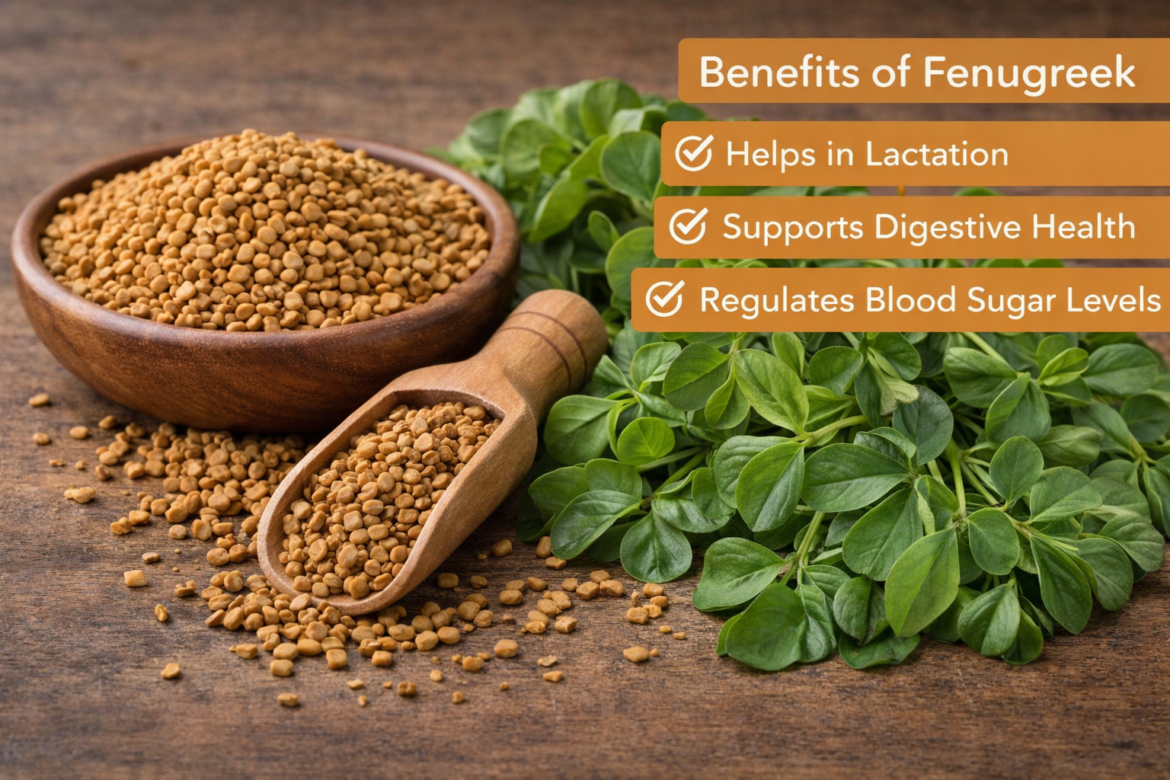
Fenugreek is one of the most extensively studied herbs for blood sugar management. Numerous clinical studies have demonstrated that fenugreek helps lower fasting blood glucose, improve insulin sensitivity, and reduce HbA1c levels. Its high soluble fiber content slows carbohydrate absorption, while its amino acids help stimulate insulin secretion.
2. Promotes Lactation
Fenugreek is the most widely used herb for supporting breastfeeding mothers. It has been shown to significantly increase milk production, often within 24–72 hours of use. Its galactagogue properties are attributed to its steroidal saponins, which mimic the effects of estrogen and prolactin.
3. Supports Digestive Health
Fenugreek is a powerful digestive tonic that soothes and protects the mucous membranes of the stomach and intestines. Its mucilage content forms a protective layer over irritated tissues, helping manage gastritis, acid reflux, and peptic ulcers. It also helps relieve constipation by adding bulk to stools.
4. Boosts Testosterone and Male Fertility
Fenugreek has been shown to support healthy testosterone levels and improve male fertility. Clinical studies have demonstrated that fenugreek supplementation increases testosterone levels, improves libido, and enhances sperm quality, including count, motility, and morphology.
5. Reduces Inflammation
Fenugreek possesses powerful anti‑inflammatory properties that benefit a wide range of conditions, including arthritis, joint pain, and inflammatory bowel disease. Its flavonoids and saponins inhibit inflammatory cytokines and enzymes, reducing pain and swelling.
6. Supports Heart Health
Fenugreek helps maintain healthy cholesterol levels by reducing LDL cholesterol and triglycerides while supporting HDL cholesterol. Its high fiber content helps bind and eliminate cholesterol from the body, while its antioxidant properties protect blood vessels from damage.
7. Acts as a Potent Antioxidant
Fenugreek is rich in antioxidants that protect cells from oxidative damage. Its flavonoids, polyphenols, and alkaloids neutralize free radicals, reduce oxidative stress, and help slow the aging process.
8. Supports Weight Management
Fenugreek helps support healthy weight management by increasing satiety, reducing appetite, and improving metabolism. Its high soluble fiber content helps control cravings and reduces calorie intake.
9. Promotes Skin Health
Fenugreek is traditionally used for skin health both internally and externally. It helps manage acne, eczema, and skin inflammation. When applied topically as a paste, fenugreek helps soothe irritated skin and promote wound healing.
10. Supports Hair Health
Fenugreek is widely used to promote hair growth, reduce hair loss, and improve scalp health. Its protein and nicotinic acid content help strengthen hair follicles, while its antifungal properties help manage dandruff and scalp conditions.
Ayurvedic Properties of Fenugreek
In Ayurveda, fenugreek is classified with the following properties: Rasa (Taste) is bitter, pungent, and sweet. Virya (Energy) is heating (ushna). Vipaka (Post‑Digestive Effect) is pungent. Dosha Effect pacifies Vata and Kapha, and can increase Pitta when used in excess. Dhatu (Tissue Affinity) includes plasma, blood, muscle, fat, and reproductive tissues. Srotas (Channel Affinity) includes digestive, circulatory, reproductive, and respiratory channels. It is considered a deepana (digestive stimulant), pachana (digestive), rochana (appetite‑stimulating), vatahara (Vata‑pacifying), kaphahara (Kapha‑reducing), stanyajanana (lactation‑promoting), and balya (strength‑promoting) herb.
Fenugreek Dosage: How Much Should You Take?
Dosage depends on the form of fenugreek you are using. For fenugreek seeds, 2–4 grams per day (approximately ½ to 1 teaspoon), soaked overnight and consumed, is typical. For fenugreek powder, 2–4 grams per day, taken with warm water or honey. For capsules, 500–2,000 mg per day is common. For lactation support, 2–3 grams three times daily is often recommended. For fenugreek tea, steep 1 teaspoon of seeds in 8 ounces of hot water for 10–15 minutes, up to 2–3 cups daily. For sprouted fenugreek seeds, 1–2 tablespoons per day. It is best to start with a lower dose and gradually increase while monitoring your body’s response.
When to Take Fenugreek: Best Practices
For blood sugar support, take fenugreek with meals. For lactation support, take it consistently throughout the day, typically 3 times daily. For digestive support, take it before or after meals. For general wellness, fenugreek can be taken daily. Soaking seeds overnight softens them and reduces bitterness. Because fenugreek is heating in nature, it is especially beneficial during the winter months or for individuals with Vata and Kapha constitutions.
Fenugreek Side Effects and Safety
Fenugreek is generally considered very safe for culinary and medicinal use. However, some individuals may experience mild digestive upset, gas, bloating, or diarrhea, especially when taking higher doses. Fenugreek may cause a distinctive maple‑like odor in sweat and urine, which is harmless. Pregnant women should avoid therapeutic doses of fenugreek, as it may stimulate uterine contractions. Breastfeeding women can safely use fenugreek for lactation support. Individuals with peanut or chickpea allergies may also be allergic to fenugreek, as they belong to the same plant family. Those taking medications for diabetes or blood thinning should monitor their levels closely, as fenugreek may have hypoglycemic and mild anticoagulant effects. Always consult a qualified healthcare professional before starting any new supplement, especially if you have underlying health conditions or are taking prescription medications.
How to Choose a High‑Quality Fenugreek
When selecting fenugreek, look for organic certification to ensure no pesticides or synthetic fertilizers are present. Seeds should be uniform in color, free from debris, and have a strong, characteristic aroma. For powder, choose products that are freshly ground and stored in airtight containers. Third‑party testing confirms purity and potency. Avoid products with unnecessary fillers, artificial colors, or preservatives.
Frequently Asked Questions About Fenugreek
How long does fenugreek take to work?
For lactation support, many mothers notice increased milk production within 24–72 hours. For blood sugar support, improvements are typically noticed within days to weeks. For hormonal and fertility benefits, 4–8 weeks of consistent use is often needed.
Can I take fenugreek every day?
Yes, fenugreek is safe for daily, long‑term use in appropriate doses.
Is fenugreek safe during pregnancy?
Fenugreek in culinary amounts is generally considered safe during pregnancy. Therapeutic doses should be avoided, as fenugreek may stimulate uterine contractions.
Does fenugreek increase breast size?
Fenugreek contains phytoestrogens that may have mild estrogenic effects. Some women report temporary breast fullness during lactation, but significant breast enlargement is not typically observed.
Conclusion
Fenugreek is truly a versatile and powerful herb—a gentle yet effective remedy that supports blood sugar balance, promotes lactation, boosts testosterone, and enhances digestive health. Its unique combination of steroidal saponins, fiber, and antioxidants makes it one of the most valuable herbs for metabolic and hormonal health. Whether you are a breastfeeding mother seeking to enhance milk production, someone looking to support healthy blood sugar, or simply wanting to improve digestion and vitality, fenugreek offers profound benefits. As with any herb, quality matters—choose organic, fresh fenugreek for the best results. At Ayurveda Wellness USA, we are committed to bringing you the highest quality, evidence‑based information on Ayurvedic herbs. For trusted, pure, and sustainably sourced fenugreek, explore our Atma Naturals product line, crafted with integrity and backed by science.